

Christine Hernandez
Early childhood educator, writer, and mother. Your friendly neighborhood guide to all things parenting.
Whether you find it exhilarating or overwhelming, one of the most important aspects of operating a childcare center is managing a well-balanced budget.
The cornerstone of financial health in childcare is effective planning and tracking of your finances. Understanding your expenses in detail allows you to identify areas for improved efficiency. The hard part is finding a way to do all this in a way that works for you.
In this article, we will demystify the fundamentals of budgeting necessary for running a daycare center. Download our free budget template and follow along.
Time to dive into the numbers! Grab your calculator, and let's get started.

At a fundamental level, a budget tracks the income and expenses of your center. The aim is to generate more income than expenses, ensuring the continuity of your business.
But, delving deeper, the complexity increases. When accounting for everything - from toys and snacks to staff salaries and rent - expenses quickly accumulate.
In-depth budget planning aids in crucial decision-making, such as:
- Identifying indispensable items versus luxuries.
- Calculating the required number of enrollments to sustain your business.
- Determining the fees needed to cover all costs.
Budgeting isn't just for financial experts; with a systematic approach, anyone can master it. By breaking down your budget line-by-line, you can create a financial plan that suits your needs.
If you're still considering opening a center, our article on the pros and cons of starting a preschool might be helpful.
The rest of this article, along with the downloadable template, will guide you on the right path!
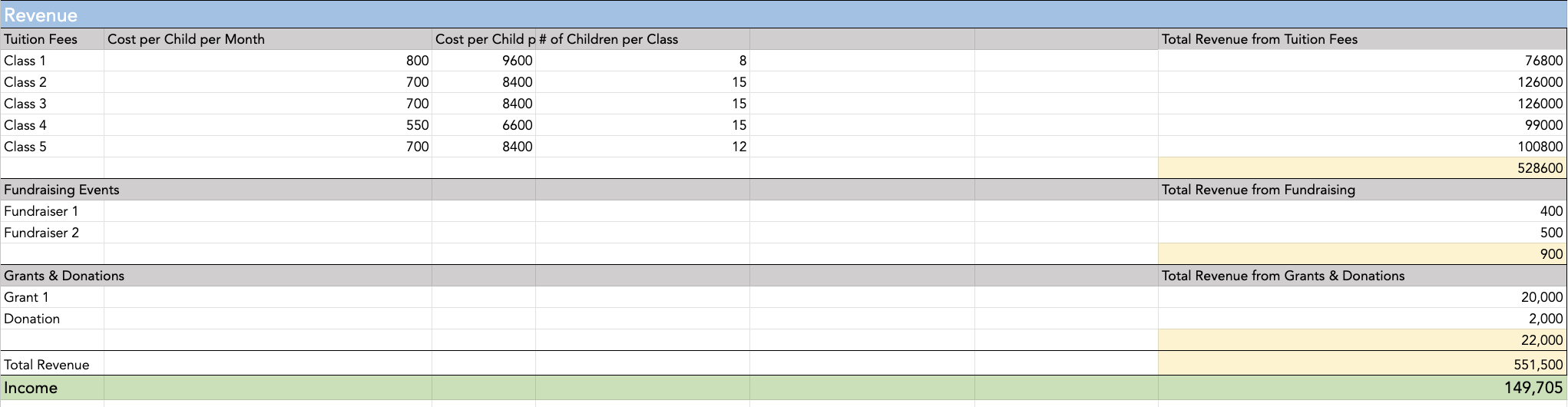
Income
The money your center brings in, will mainly come from tuition fees. However, there are options like grants and fundraisers that can help increase your income. Keeping track of how much your center is bringing in is very important, but it is only a piece of the puzzle.
When setting your tuition fees you need to consider:
- Your operating budget.
- Your center's capacity.
- Competitive rates.
- Child age (impacting teacher/child ratios).
- Possible discounts (for siblings, employees).
- Policies on charging during absences.
- Operational weeks per year.
If stuck, consider working backwards by totaling all expenses and then determining the necessary number of children and per-child cost.
Administrative Fees Beyond basic enrollment costs, you can charge for additional services, but avoid overcharging. Common administrative fees include registration, late payments, and transportation.
Grants Grants can significantly aid childcare centers by reducing the need for higher enrollment fees, benefitting both owners and parents. Explore options with governmental and advocacy groups.
Fundraising Engage your community in supporting your childcare center through fundraising events. This not only aids financially but also raises awareness about your center.
Expenses
Running a daycare involves a broad range of costs, generally categorized into staff and operational expenses. Key budgeting tips include:
- Estimating high to avoid shortfalls.
- Maintaining an emergency fund.
- Factoring in inflation.
Staff Costs
One of the largest expenses in running a daycare is staff salaries. This includes the wages of directors, lead teachers, assistant teachers, floaters, teacher aides, and administrative staff. Adequate staffing is crucial to maintain quality care and meet regulatory child-to-staff ratios. Competitive salaries also help in attracting and retaining qualified personnel.
Employee Benefits
Benefits like health insurance, workers' compensation, Medicare, and FICA contributions are significant. They play a vital role in ensuring staff wellbeing and compliance with employment laws.
Staff Training
Ongoing training for staff, including CPR, first aid, and professional development sessions, is essential. It ensures that staff are up-to-date with the latest childcare practices and safety standards. Staff appreciation initiatives also contribute to a positive work environment.
Supplies
This encompasses art and program supplies, furniture upkeep, games, outdoor equipment, and office supplies. These materials are vital for creating a stimulating and educational environment for children.
Facility Costs
Expenses related to rent or mortgage, utilities, phone, and insurance/liability are significant. They ensure that the daycare operates in a safe, reliable, and legally compliant facility.
Travel
Travel costs usually arise from organizing field trips, which are an important aspect of children’s educational and social development.
Marketing
It's important to market your childcare program online, since this is where most parents are searching. You can use Winnie to highlight your program to interested families and fill your open spaces quickly. Be sure to add photos to your page, keep your availability up-to-date and ask current and former parents for reviews.
How to Use the Budget Sheet
Our budget sheet is a comprehensive tool designed to help you effectively manage your daycare's finances. It's provided in a read-only Google Sheet format. Here's a guide on how to use it:
Accessing the Budget Sheet
- Find the Budget Sheet: Click on the link provided in the article to access the Google Sheet.
- Make Your Own Copy: Since the original sheet is read-only, you'll need to create a personal copy. Go to
File>Make a copyin the Google Sheets menu. This will create a copy in your own Google Drive, which you can edit and customize.
Customizing Your Budget Sheet
- Input Your Data: Start by entering your daycare's specific financial information into the designated cells. This includes staff salaries, operational costs, supplies, and any other expenses or income sources.
- Adjust Formulas if Necessary: The sheet comes with pre-set formulas to calculate totals. If you add new rows or categories, make sure to update these formulas accordingly to ensure accurate calculations.
Navigating the Sheet
- Different Sections: The sheet is divided into various sections such as income, expenses, staff costs, and more. Navigate through these sections to input data relevant to each category.
- Summary Overview: There's typically a summary section that automatically updates to give you an overview of your financial status based on the data you've entered.
Tips for Effective Use
- Regular Updates: Regularly update the sheet with current financial data to keep track of your daycare's financial health.
- Monitor Budget vs. Actuals: Use the sheet to compare your budgeted amounts with actual expenditures and income. This will help you identify areas where you are over or under budget.
- Plan for the Future: The budget sheet can be a valuable tool for future planning. Use it to forecast and plan for upcoming expenses or potential expansions.
Security and Sharing
- Keep it Secure: Since this document contains sensitive financial information, be cautious about who you share it with. Use Google Sheets' sharing settings to control access.
- Collaboration: If you have a management team, you can use the sheet for collaborative budget planning. Just share your copy of the sheet with your team members, ensuring they have the appropriate editing permissions.
By following these steps and tips, you can effectively use the budget sheet to manage your daycare's finances, ensuring a well-organized and financially sound business.


