

Tia Sauls
Tia Sauls is an early education specialist who helps families and educators navigate the child care, early education, and K–12 landscapes.
Should your program offer mixed-age classrooms or single-age classrooms? Both can be successful but that doesn’t make the decision easier.
Understanding the benefits of each can help you see which approach works best with your program’s goals, capacity, curriculum and teachers skills. In this guide we take you through the benefits and challenges of mixed-age classrooms and single-age classrooms to help you make your decision.
What is a Mixed-Age Preschool Classroom?
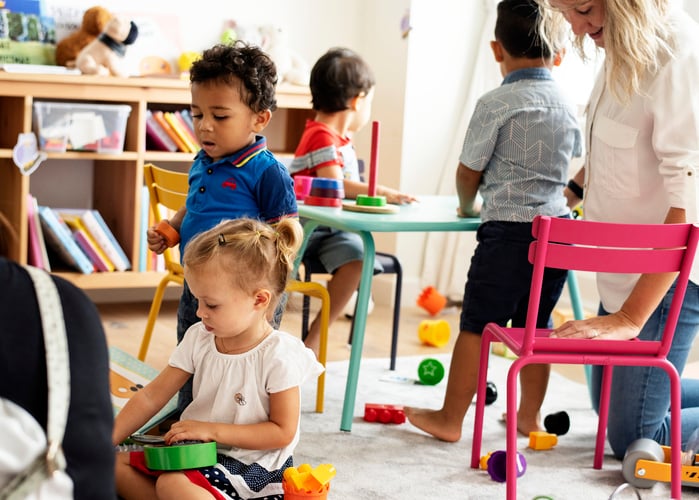
Mixed-age preschool classrooms consist of children from different age ranges. This typically includes ages two to five. This learning environment encourages peer learning, collaboration and flexible progression.
What is a Single-Age Preschool Classroom?
A single-age classroom consists of a group of children all the same age and at similar developmental stages. This approach is more standardized, practiced and tends to make lesson planning and classroom management easier.
Differences Between Mixed-Age and Single-Age Classrooms
|
Mixed-Age Classroom |
Single-Age Classroom |
|
Different aged children learning together |
Children grouped by age |
|
Various developments stages |
Similar developmental stages |
|
Flexible enrollment options |
Easier classroom management |
Benefits of a Mixed-Age Preschool Classroom
Mixed-age classrooms display how children normally interact and engage in traditional settings like home in their communities. Here are a couple of benefits that make this approach so attractive.
Leadership Development
In a mixed-age classroom, children learn skills from teachers and each other. Younger classmates witnessing older children demonstrate positive behavior, classroom expectation and take on leadership roles. All of which help them develop their leadership skills.
Learning Through Observation
While learning from and observing their older classmates, younger children can develop at a higher level, which they may only achieve later when in a classroom of the same age.
Classroom Community
With children staying in the same environment for longer periods of time, they often develop stronger bonds and in turn social skills. This classroom set up creates a more collaborative learning environment and invites more opportunities for peers to support each other.
Enrollment Flexibility
With many programs already using rolling enrollment, the real advantage is the broader pool of eligible children you can draw from when a spot opens up in a classroom, all while staying within your state's required ratios.
Challenges of Mixed-Age Preschool Classrooms
While mixed-age classrooms offer many great benefits, it does come with its fair share of challenges. Take these challenges into consideration when deciding on implementing this classroom style at your program.
Curriculum Planning can be Difficult
What may be appropriate for a five-year-old may not be appropriate for a two-year-old to learn. This makes lesson and curriculum planning more challenging in a mixed-age classroom. These lessons also typically require additional planning and sometimes resources.
Classroom Management Requires More Skills
Teaching a classroom of children at different developmental stages can be complex. Younger children might need additional support which can take away from the attention needed by older children. This will require teachers to be trained in managing and maintaining a classroom that will support every child.
Licensing and Ratio Compliance
All states have licensing and ratio requirements for childcare programs. Ratios and group sizes are determined by the age of the youngest child in the classroom, so it's important to review your state's specific regulations before implementing this model.
Children May Need Age-Specific Instruction
Children preparing for kindergarten will require lessons that specifically focus on literacy and numeracy skills. This means that small-group learning may need to be incorporated into lessons to ensure everyone stays on track.
Benefits of Single-Age Preschool Classrooms
Single-aged classrooms are traditional for a reason. They have been tried and tested for years and continue to provide a structured learning environment for many children.
Easier Lesson Planning
A classroom with children of the same age often means that the children are at the same developmental stage. This allows teachers to easily plan activities with consistent learning objectives and outcomes.
Predictable Classroom Management
Children in the same age group usually have similar social-emotional skills, attention spans and physical abilities. This makes classroom management more predictable as teachers are able to establish routines and classroom expectations easier.
Assessment and Progress Tracking
Assessing and tracking is easier when the children are evaluated against the same benchmarks. Providers are also able to easily identify in which areas children require extra support.
Challenges of Single-Age Classrooms
While single-age classrooms are widely used, they do come with their challenges, which you should consider.
Fewer Peer Learning Opportunities
Although collaboration can still occur in a single-age classroom, peer learning isn’t as frequent. With everyone being the same age, younger children aren’t exposed to older children who can help them develop leadership skills.
Frequent Classroom Transitions
In a single-age classroom, children progress to the next classroom each year. Although this transition is the norm, it still requires some adjustment. And for some children, especially those who thrive on consistency, establishing new routines, becoming familiar with a new teacher and a new classroom environment can be overwhelming.
Less Enrollment Flexibility
In many cases when a space does become available in a classroom, a provider can only offer it to a child in a specific age group. This can impact center flexibility and can create fluctuations in the classroom.
Questions to Ask Before Choosing a Classroom Model
Before deciding on a classroom structure, consider the following questions:
- What are your state licensing requirements?
- Are your teachers experienced and skilled enough?
- Will the classroom model fit with your curriculum?
- Do you frequently experience enrollment fluctuations?
- What are the families in your community looking for?
Answering these questions can help determine whether a mixed-age or single-age approach is the best fit for your program.
Final Thoughts
While both approaches can give children the support they need to thrive, they need to be implemented effectively. The success of your model depends on the skill level of teachers, planning and your program’s goals.
With the pros and cons in mind, remember that the best classroom structure is the one that would best support the development of the children and the goals of your program.


