

Sara Mauskopf
Sara Mauskopf is the co-founder and CEO of Winnie. She’s also the mom of three young children and vocal advocate for high quality child care and early education for all.
There's a moment most parents recognize: you're running late, your toddler insists on putting on their own shoes, and every instinct in you wants to just do it for them. So you do. And then it happens again. Somewhere along the way, a pattern forms because it's easier and faster and you really do need to get out the door.
That pattern is natural, but it has a cost.
Researchers and educators, from Montessori classrooms to developmental psychology labs, have long found that children who are given age-appropriate autonomy early on develop stronger problem-solving skills, higher self-esteem, and more resilience. Independence isn't something kids grow into automatically. It's something we have to make room for, often by stepping back when every instinct says to step in.The good news? You don't need a total parenting overhaul. You just need to start and to know what "independent" actually looks like at each stage.
Babies (0–12 months)
Independence in infancy doesn't look like self-sufficiency. It looks like secure attachment. Babies who trust that their caregivers will respond to their needs actually become more independent toddlers, not less. This is the paradox of early childhood: you build autonomy by being present.
That said, there are small but meaningful ways to encourage agency even in babies:
- Give them floor time. Babies who spend time on their backs and stomachs, free to move and explore, develop body awareness and problem-solving capacity. Resist the urge to constantly pick them up the moment they fuss. Give them a beat to figure it out.
- Follow their lead. When your baby shows interest in something, a toy, a sound, a face, follow that gaze. Let them set the pace of interaction. This early experience of "my interests matter" is foundational.
- Narrate, don't do. Before you swoop in to fix something, describe what's happening. "You're trying to reach that block. It's just out of reach." This builds language and patience simultaneously.
Toddlers (1-3 years)
Toddlers are wired for independence, but they're also wired for frustration. The job here is to create conditions where they can succeed with effort, not hand them success or rescue them from every hard moment.
Practical starting points:
- Dressing themselves. Start with the easiest wins: putting on slip-on shoes, choosing between two shirt options. The goal isn't speed. It's agency.
- Simple food prep. A 2-year-old can wash vegetables, tear lettuce, stir batter, and pour from a small pitcher. Yes, it's messy. The mess is the point.
- Cleaning up. Make it easy to do the right thing: low hooks for coats, bins at their height for toys, a small stool so they can reach the sink. When the environment is set up for them, they can take ownership of it.
- Resist rescuing immediately. When your toddler is struggling or moving too slow, count to 10 before intervening. More often than you expect, they'll get there.
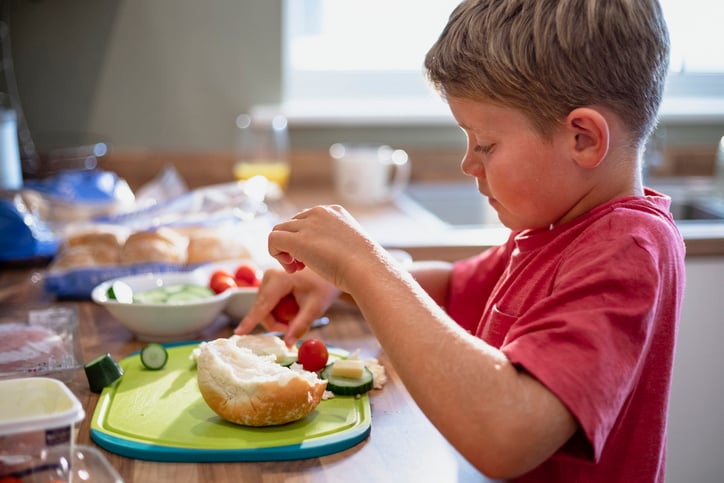
Preschoolers (3-5 years)
Preschoolers can handle more than we usually give them credit for. At this age, kids thrive when they have genuine responsibilities, not play responsibilities, but real ones that matter to the household.
- Chores with stakes. Setting the table, feeding a pet, watering plants, putting laundry in the hamper. Explain that these are jobs in the family.
- Getting themselves ready. A visual routine chart (pictures, not words) lets preschoolers own their morning: get dressed, eat breakfast, brush teeth, get backpack. You become the coach, not the manager.
- Making choices and living with them. Let them choose their outfit even if it doesn't match. Let them pick their snack from two options. Let them decide how to spend 20 minutes of free time. Small decisions now build the muscle for bigger ones later.
- Problem-solving out loud. When something goes wrong, resist solving it for them. Ask instead: "What do you think we should do?" You'll be surprised what they come up with.
Early Elementary (6-8 years)
By first or second grade, kids are ready for independence that extends beyond the home, and they need it developmentally.
- Solo tasks at home. Making their own simple breakfast, packing their own backpack, being responsible for their homework without daily reminders.
- Navigating conflict. At this age, the instinct to intervene in peer conflict is strong. But kids who learn to work through disagreements, with guidance rather than interference, develop social competence that lasts.
- Longer leash. Depending on your neighborhood and family, this might mean walking to a neighbor's house alone or playing outside without a parent hovering. These moments of "I can handle this" are formative.
Tweens (9-12 years)
By this stage, the work of independence is less about tasks and more about trust — extending it, even when it's uncomfortable.
- Let them manage their own schedule. Homework, extracurriculars, social plans. You're the backstop, not the project manager.
- Give them real input. Consult them on family decisions, on their own schedule, on how to handle a hard situation at school. Being consulted builds ownership.
- Real cooking, not just helping. Tweens can scramble eggs, follow a simple recipe, make their own lunch, and eventually cook a full meal for the family. Give them a night of the week and get out of the kitchen.
- Talk about hard things. Independent kids aren't kids who never struggle. They're kids who know they can come to you when they do. That trust doesn't happen automatically; it's built through years of being taken seriously.
The through-line
Whether you're navigating a 9-month-old's floor time or a 10-year-old's first time home alone, the core principle is the same: believe your child is more capable than you're currently allowing them to be. Then give them a chance to prove it.
Independence isn't a destination. It's a practice.


