
-1.jpg?height=100&name=Image%20from%20iOS%20(2)-1.jpg)
Winnie
Private school tuition can be a significant financial investment for many families, but financial aid can make it much more attainable. If you're wondering how financial aid works at private schools, who qualifies, how it’s calculated, and what the process looks like, you’re not alone.
Here’s everything parents need to know about how private schools determine financial aid, what’s required to apply, and how to increase your chances of receiving support.
How Is Financial Aid Determined?
Most private schools use need-based financial aid, which means they assess how much your family can reasonably afford to pay, then try to bridge the gap between that and the actual cost of tuition.
At its core, the school is comparing:
-
Cost of attendance (COA): Tuition, fees, and potentially books, meals, or transportation.
-
Your family's ability to pay: Based on income, savings, household expenses, and other financial details.
The difference between those two numbers is what the school tries to cover through aid.
Many schools use third-party services—like SSS (School and Student Services), FACTS, or TADS—to process financial aid applications and calculate a family’s estimated contribution.
What Is Considered in Need-Based Calculations?
To determine need, schools and aid processors evaluate a range of financial factors.
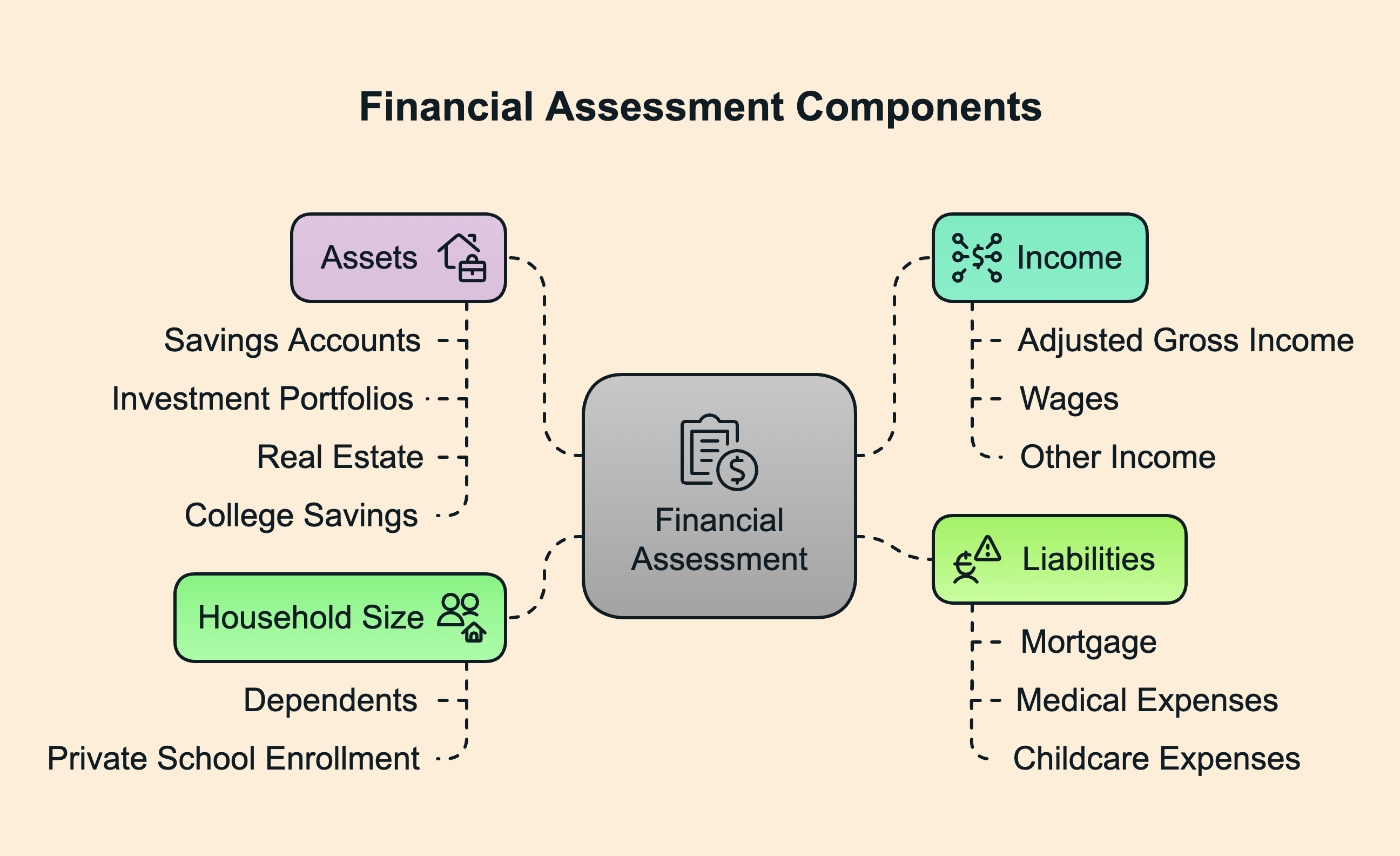
1. Income
-
Adjusted gross income from tax returns
-
Wages from W-2s or self-employment
-
Other sources of income (alimony, rental income, bonuses, etc.)
2. Assets
-
Savings and checking account balances
-
Investment portfolios
-
Real estate holdings (including home equity in some cases)
-
College savings accounts
3. Liabilities
-
Mortgage and other debt obligations
-
Outstanding medical expenses
-
Childcare or eldercare expenses
4. Household Size
-
Number of dependents
-
Number of children enrolled in private schools or colleges
It's a holistic process, not just about income. A family earning six figures may still qualify for aid if they have multiple children in private school, significant medical costs, or live in a high-cost area.
School-Specific Aid Policies
Every school sets its own financial aid policies, even if they use a third-party service to process applications. That means two schools could offer very different packages to the same family.
Some schools:
-
Have large endowments and generous aid budgets
-
Offer aid to middle- and upper-middle income families
-
Prioritize aid for new families to increase enrollment
-
Require separate applications for merit-based aid or scholarships
Always ask each school for their financial aid philosophy, average award amounts, and what percentage of families receive aid.
What If You Have Multiple Children in Private School?
Good news: having more than one child in private school can increase your chances of qualifying for aid. Most schools factor in total tuition obligations across the household, which reduces your expected contribution per student.
Even families who might not qualify for aid with one child in private school may be eligible once they have two or more enrolled.
What Documents Do You Need to Apply?
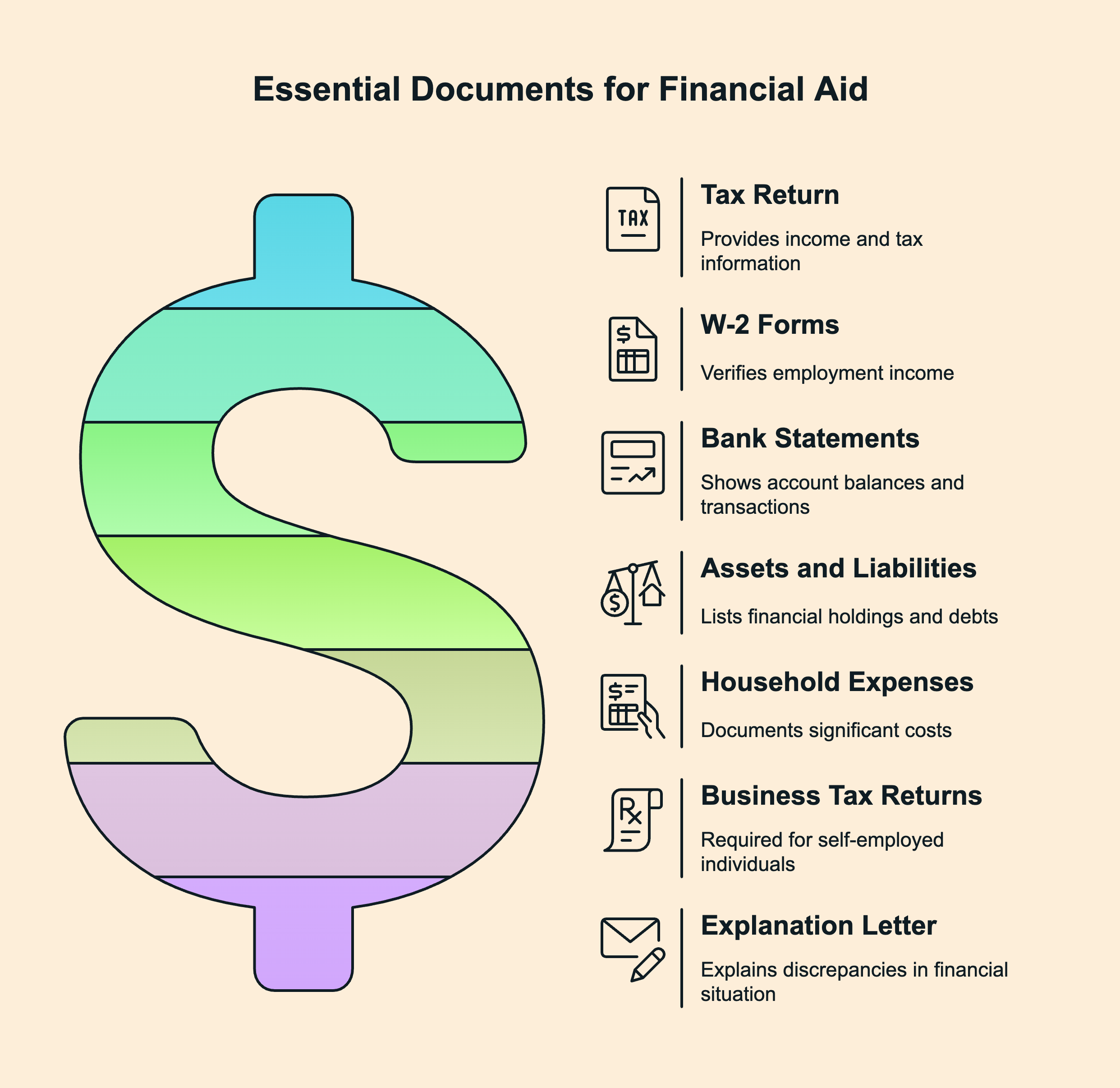
Financial aid applications are thorough and require documentation to verify your family’s financial picture.
-
✅ Most recent tax return (typically the prior year)
-
✅ W-2 forms or 1099s
-
✅ Bank statements (checking, savings, and investment accounts)
-
✅ List of assets and liabilities
-
✅ Documentation of major household expenses (e.g., medical bills, childcare, eldercare, or special education costs)
-
✅ Business tax returns (if self-employed)
Some schools may ask for a letter explaining financial circumstances, especially if your current situation differs from what your tax documents reflect.
What Types of Financial Aid Are Available?
While most aid is need-based, schools may offer several types of support:
-
Grants: Direct aid that doesn’t need to be repaid
-
Sliding scale tuition: Adjusted tuition based on income
-
Scholarships: Sometimes merit-based, for academics, arts, sports, or community involvement
-
Sibling discounts: Reduced tuition for families with multiple children enrolled
-
Emergency aid: For families facing sudden changes like job loss or medical crises
What’s the Expected Financial Aid Process?
Here’s what a typical timeline looks like:
-
Start early: Most applications open in the fall for the following school year.
-
Gather documents: Have tax returns and financial paperwork ready.
-
Submit the application: Through a school’s portal or third-party provider like FACTS or SSS.
-
Upload required documents: Most platforms offer secure document uploads.
-
Await review: The school’s financial aid committee reviews each application.
-
Receive award letter: Typically sent with or shortly after admission offers.
Some schools require annual reapplication for aid, so plan to repeat the process each year.
Common Misconceptions About K-12 Financial Aid
Many parents assume financial aid is only for low-income families but it can be for families with higher income as well. Here are some common myths:
-
❌ "We make too much to qualify."
→ Reality: Many middle-class and even upper-middle-class families qualify, especially if they have multiple dependents or live in high-cost areas. -
❌ "Aid is only for exceptional students."
→ Reality: Most aid is need-based, not merit-based. -
❌ "Applying for aid will hurt our child’s chances of admission."
→ Reality: Many schools are need-blind during admission or have separate admissions and aid committees. -
❌ "We didn’t qualify last year, so we won’t qualify this year."
→ Reality: If your financial situation has changed, reapplying may yield a different result.
Tips to Increase Your Chances of Receiving Aid
- Apply early: Some schools have limited aid budgets and allocate funds on a rolling basis.
- Be thorough and honest: Provide accurate, complete documentation to avoid delays or disqualification.
- Explain special circumstances: A brief letter can help explain changes in income, unexpected expenses, or anything not reflected in your tax forms.
- Apply if you're unsure: Don’t self-disqualify if you need the aid. Many families receive aid they didn’t think they’d qualify for.
- Ask questions: Each school’s policies differ. Reach out to the financial aid office to clarify deadlines, forms, or available aid types.
Financial aid can be a lifeline for families who want to provide their child with a private education but need help with the cost. While the process may feel overwhelming at first, understanding how schools determine aid can make it much more manageable.
No matter your income level, private school can feel like a stretch and it's important to consider financial aid as one of the ways to afford private school.


