
-1.jpg?height=100&name=Image%20from%20iOS%20(2)-1.jpg)
Winnie
Private school can offer a high-quality, tailored education, but it often comes with a price tag that feels out of reach for many families. The good news? There are more ways than ever to make private education affordable, and many parents are surprised to learn just how much help is available.
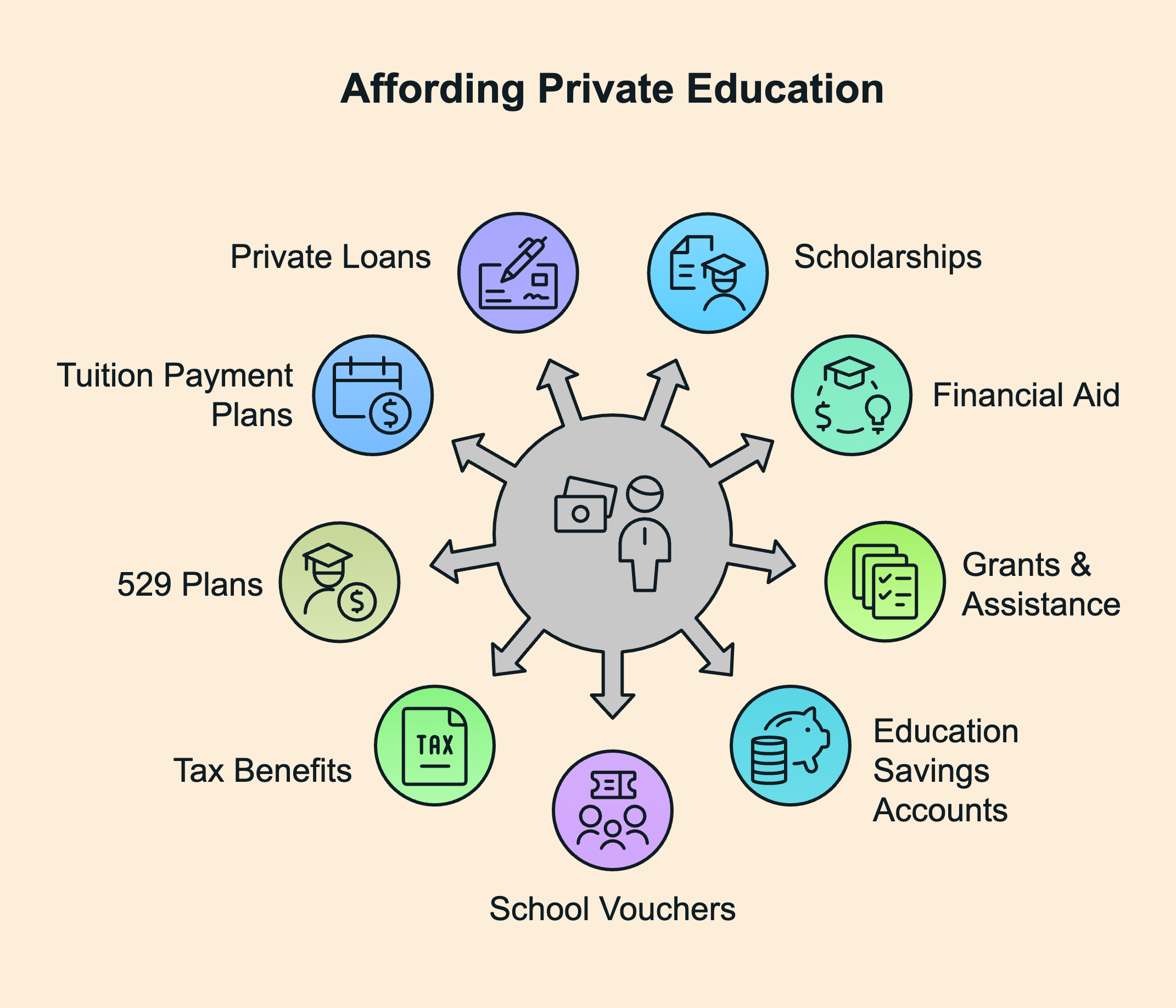
Whether you're just starting your school search or already considering tuition bills, here's a breakdown of the options families can explore to help pay for private school.
1. Scholarships
Scholarships are a great way to offset the cost of private education if they are offered. These funds do not need to be repaid, making them especially valuable for families. They can be awarded based on a wide range of criteria:
-
Merit-based: Awarded for academic performance, artistic talent, or athletic ability.
-
Need-based: Given to families based on financial circumstances.
-
Demographic-based: Focused on supporting students from specific backgrounds, such as first-generation college-bound students, children of veterans, or students from underrepresented communities.
-
School-specific: Many private schools offer their own internal scholarships—some automatically considered during admission, others requiring a separate application.
Parents should ask every school they are considering about available scholarships, eligibility criteria, and deadlines. Outside of school-provided options, community organizations, nonprofits, and faith-based institutions may also offer scholarships.
2. Financial Aid
Financial aid is another essential resource and is widely offered by private schools. Unlike scholarships, which may be merit-based, financial aid is typically based on your family’s income, assets, expenses, and overall financial situation.
Many schools partner with third-party services such as SSS by NAIS, FACTS, or TADS to evaluate applications fairly and consistently. While the process can be detailed, it’s well worth the effort—some schools offer significant aid packages that can cut tuition by 75% or more.
What to expect:
-
You’ll likely need to submit tax returns, W-2s, and household budget information.
-
Aid may be reassessed annually, so it's important to plan for potential changes.
-
Applying early improves your chances of getting maximum aid.
Some schools also offer emergency aid or mid-year assistance if your financial situation changes unexpectedly.
3. Grants & Assistance Programs
Grants—like scholarships and financial aid—are funds that do not have to be repaid, but they often come from sources beyond the school itself. These may include:
-
Local or state government education departments
-
Foundations supporting education access
-
Religious organizations
-
Professional associations (some offer grants to members' children)
Unlike financial aid, which usually comes from the school, grants may require additional applications and documentation. However, they can stack with other forms of aid to reduce costs even further.
Parents should also look into any employer-sponsored educational benefits or grants, especially if working for a large corporation, hospital system, university, or military branch.
4. Education Savings Accounts (ESA)
Education Savings Accounts (ESAs) are state-sponsored programs that allow public education funds to follow students to the educational setting of their choice—including private schools. Not every state offers ESAs, but in those that do, the funds can often be used for:
-
Private school tuition
-
Curriculum materials
-
Educational therapies
-
Tutoring or online learning
Eligibility and rules vary widely by state, but ESAs are growing in popularity and availability. In many cases, ESAs are designed to empower families who want more control over their child’s education, especially those in underserved or underperforming districts. Visit your state’s Department of Education website to learn what your state offers.
5. School Voucher Programs
In some states, school vouchers allow public education funds to be used toward private school tuition. These programs are typically targeted at:
-
Low-income families
-
Students with special needs
-
Children zoned for low-performing public schools
Vouchers can cover partial or full tuition depending on the state and the program’s rules. However, not all private schools accept vouchers, so it’s important to ask each school whether they participate in your state’s program.
6. Tax Benefits
Many families don’t realize there are federal and state tax benefits designed to ease the burden of paying for private school. While they may not reduce tuition up front, they can provide savings at tax time.
Federal options:
-
Coverdell Education Savings Accounts allow up to $2,000 in annual contributions, with tax-free withdrawals for qualified K-12 expenses.
-
529 Plans (more on these below) now include up to $10,000 per year for K-12 tuition in many states.
State-level benefits:
-
Some states offer tax deductions or credits for private school tuition or other educational expenses.
-
Others provide tax incentives for contributions to scholarship-granting organizations or school choice programs.
Families should consult with a tax professional to make sure they’re getting every benefit they qualify for.
7. 529 Plans for K-12 Education
Originally designed for college savings, 529 Plans have become increasingly flexible. Thanks to changes in federal law, families can now use up to $10,000 per year per student for K-12 private school tuition in most states.
529 Plans offer:
-
Tax-free growth on investments
-
Tax-free withdrawals for qualified expenses
-
High contribution limits depending on the state
These plans can be a great tool for families planning ahead, or even for grandparents and relatives who want to help fund a child’s education. Some states even offer a state income tax deduction for contributions to 529 accounts. Check your plan provider’s rules and your state’s laws to ensure K-12 expenses are covered.
8. Tuition Payment Plans
Private schools understand that a single large tuition payment isn’t feasible for many families. That’s why most offer tuition payment plans, which divide the total cost into monthly or quarterly payments—often at little or no interest.
Benefits of payment plans:
-
Predictable monthly budgeting
-
Smaller upfront financial burden
-
Often more affordable than borrowing
Some schools even allow extended payment plans that span multiple years. Be sure to ask what options are available and whether there are any administrative fees.
9. Private Loans
While not the first option families should turn to, private education loans can be a way to bridge a funding gap. These loans are typically offered by banks, credit unions, or specialized education lenders.
Things to consider:
-
Interest rates vary and may be higher than federal student loans
-
Repayment terms range from a few years to over a decade
-
You may need a co-signer with good credit
Borrowing should be a last resort after pursuing scholarships, aid, and payment plans. Be sure to fully understand the long-term implications before signing on.
Affording private school may feel overwhelming at first, but families today have more options than ever before. From ESAs and financial aid to tax-advantaged savings, it's possible to piece together a plan that works for your family. To find private schools near you, visit Winnie's K-12 private school search.


