
-1.jpg?height=100&name=Image%20from%20iOS%20(2)-1.jpg)
Winnie
When the school day ends but work day doesn't, after-school childcare becomes a necessity for many families. Whether it’s a sitter picking kids up from school, a structured program at the local center, or an enrichment activity, the price of after-school care can vary widely.
This guide breaks down what families can expect to pay in 2025 based on nationwide trends and Winnie’s data on childcare providers across the U.S.
Average Costs for After-School Childcare
Across the U.S., parents typically spend:
-
Hourly rate for individual care: $18–$25 per hour for a sitter, nanny, or caregiver.
-
Monthly cost: $150–$750 per month for group program after-school care.
These figures can shift depending on the type of care, the number of children, and your location.
Regional Price Differences
Costs are strongly influenced by where you live.
-
Higher-cost areas: Large metro regions on the East and West coasts often average $22–$25 per hour for one-on-one care.
-
Moderate-cost areas: Suburban and mid-sized cities average $18–$21 per hour.
-
Lower-cost areas: Small towns and rural communities may see rates closer to $15–$18 per hour.
Program-based care tends to have similar regional patterns, with monthly rates varying by several hundred dollars from one city to another.
Costs for Program-Based Care
Many families choose after-school programs run by schools, childcare centers, and other groups instead of hiring an individual caregiver. In 2025, typical pricing includes:
-
Public school extended day programs: $150–$400 per month
-
Childcare center after-school programs: $300–$700 per month
-
Community or recreation center programs: $160–$500 per month
These programs often include homework help, snacks, and supervised play or enrichment activities, and may offer sibling discounts.
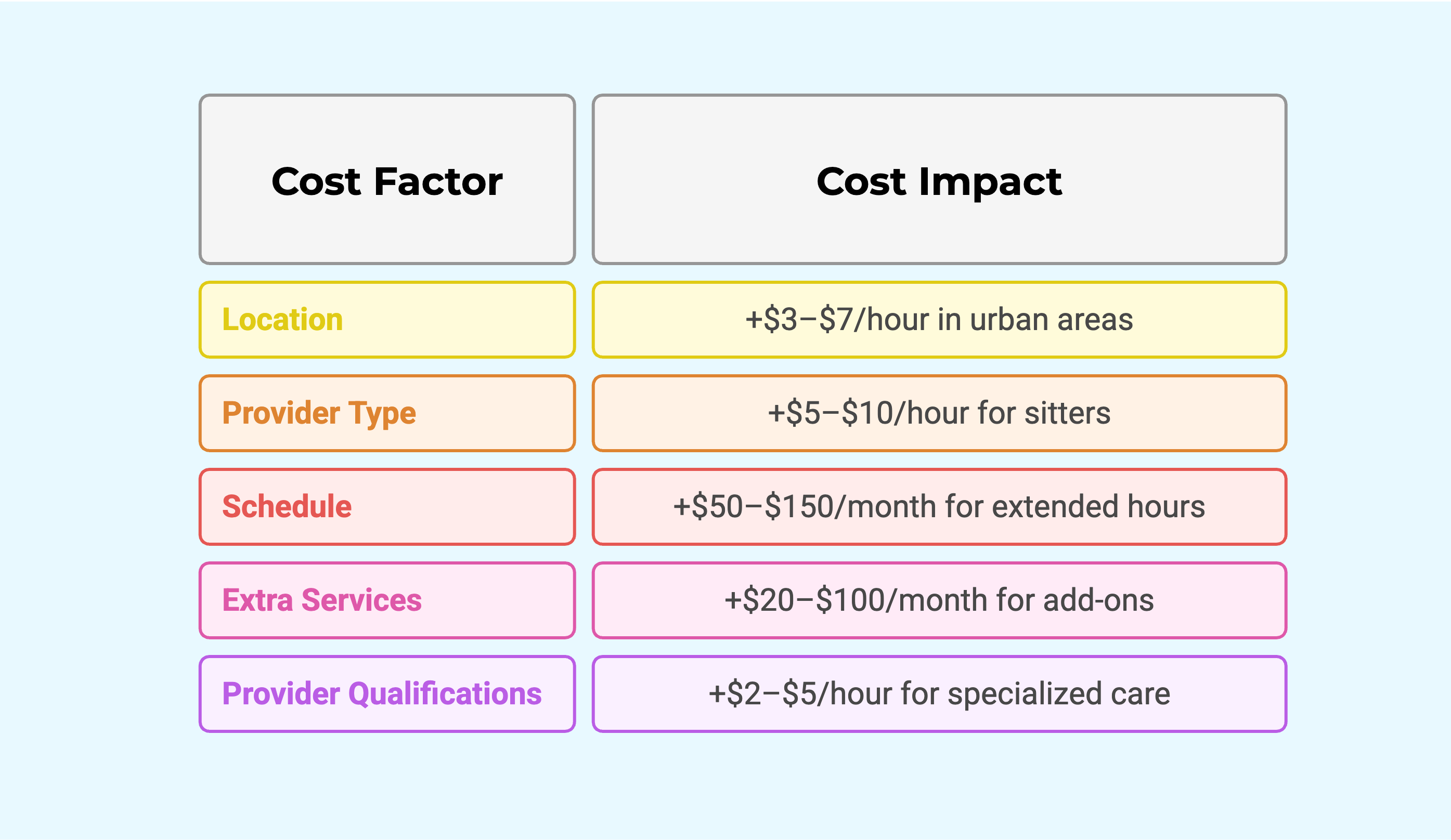
Factors that influence after-care prices
Several factors can influence your after-school childcare costs. Understanding what is offered by your after-school care provider can help you contextualize why the price may be higher or lower than other options.
-
Location & cost of living - Rates are higher in cities with higher housing and labor costs.
-
Type of provider - Individual sitters or nannies usually cost more per hour than group programs.
-
Schedule - The number of hours and whether care includes early-release days or holidays.
-
Extra services - Transportation, tutoring, and enrichment activities can add to the cost.
-
Provider qualifications - Caregivers with special training or certifications may charge more.
How After-School Care Compares to Daycare
Full-time daycare for infants can exceed $2,000 per month, making after-school care significantly less expensive in total. However, the hourly rate for after-school care is often similar—or slightly higher—because providers are covering fewer hours during peak demand times.
Tips to Save on After-School Childcare
-
Use tax benefits - The Child and Dependent Care Tax Credit and Dependent Care FSAs can offset thousands annually.
-
Ask about sibling discounts - Many programs reduce rates for families with more than one child.
-
Explore community resources - Public schools, libraries, and recreation centers often offer lower-cost options.
-
Book early - Popular programs fill up fast, and last-minute options like hiring a nanny may cost more.
In 2025, most families pay between $18 and $25 per hour for after-school nanny or babysitter childcare, or $150–$750 per month for program-based care. Prices depend on location, care type, and services offered.
Comparing multiple options, considering community-based programs, and using available tax credits can help make after-school care more affordable without sacrificing quality.


