
-1.jpg?height=100&name=Image%20from%20iOS%20(2)-1.jpg)
Winnie
When you're touring childcare programs or looking at childcare licensing information, you may come across staff-to-child or student:teacher ratios. This is the number of children each teacher or caregiver is responsible for, at a maximum. In most states, these ratios are set by law, and they vary depending on children’s ages. For example, babies require far more hands-on care than preschoolers, so the law requires fewer infants per teacher.
These rules exist to protect children and help providers deliver quality care. Here's how.
Ratios Keep Children Safe
In childcare, safety starts with supervision. When there are too many children for one adult to watch, accidents are more likely to happen. Adequate ratios ensure there’s always someone watching each child closely, ready to respond if a need arises, whether it’s a scraped knee, a dropped toy, or a moment of emotional distress.
They also help prevent caregiver burnout. When teachers aren’t stretched too thin, they can stay attentive, calm, and focused on the children, which benefits everyone.
Ratios Support Quality and Learning
The best early childhood classrooms are warm, responsive places where every child feels seen. That’s much easier to achieve when teachers have fewer children to care for. With low ratios, educators can spend more time talking with children, supporting play, and helping with skills like problem-solving and cooperation.
In the earliest years, when brains are developing at an incredible pace, this kind of personalized attention can make a lasting impact.
How Ratios Affect the Cost of Childcare
Ratios have a big effect on what families pay for care. If the law says a classroom of toddlers must have two teachers instead of one, that doubles the staffing costs for that group. Since staffing is usually the largest expense for childcare providers, these requirements directly influence tuition.
This is one reason why loosening ratio rules can make prices go down. But lowering costs this way can come at the expense of quality, safety, and teacher well-being. Small group sizes give teachers the time and energy to truly connect with each child, adapt activities to their needs, and create a safe, nurturing environment where they can explore and grow.
Higher ratios can quickly turn a classroom into crowd control mode, where the focus shifts to keeping everyone in line rather than helping each child thrive.
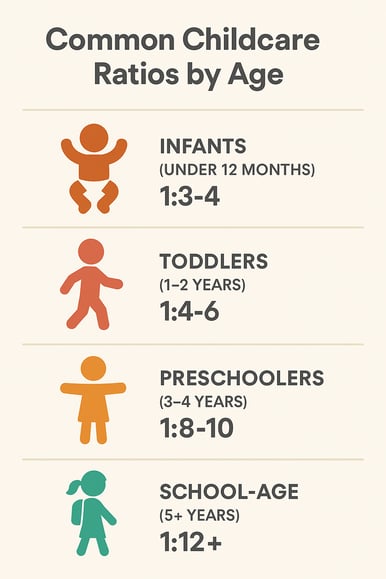
Common Childcare Ratios by Age
Exact ratios vary by state, but most follow similar patterns:
-
Infants (under 12 months): Usually one teacher for every 3–4 babies. Infants require frequent feeding, diaper changes, and comforting. They also need close supervision to ensure their safety as they begin to explore their environment.
-
Toddlers (1–2 years): Often one teacher for every 4–6 children. Toddlers are active and curious, and they require supervision to prevent accidents and injuries. They also need guidance as they learn to navigate social situations and develop self-regulation skills.
-
Preschoolers (3–4 years): Commonly one teacher for every 8–10 children. Preschoolers are capable of engaging in more independent activities and require less direct supervision than infants and toddlers. However, they still need guidance and support as they develop their social, emotional, and cognitive skills.
-
School-age (5+ years): Ratios may be 1:12 or higher, depending on the program and setting. Childcare programs for this age group often focus on providing enrichment activities, homework support, and opportunities for social interaction.
These guidelines reflect how much hands-on help and supervision children typically need at each stage. It is important to note that these are just general guidelines, and specific childcare ratios can vary depending on several factors, including:
-
State Regulations: Each state has its own regulations regarding childcare ratios. It is important to check the specific regulations in your state to ensure compliance.
-
Type of Childcare Program: Different types of childcare programs, such as daycare centers, preschools, and home-based childcare, may have different ratio requirements.
-
Accreditation Standards: Some childcare programs seek accreditation from organizations like the National Association for the Education of Young Children (NAEYC). These organizations may have stricter ratio requirements than state regulations.
-
Special Needs: Children with special needs may require more individualized attention, which may necessitate lower ratios.
For parents, knowing your child is in a classroom that meets or exceeds legal ratio requirements should be a priority when choosing a program.


