

Christine Hernandez
Early childhood educator, writer, and mother. Your friendly neighborhood guide to all things parenting.
Whether you’re considering opening a daycare in your home or looking to spruce up your existing set-up, creating learning spaces for children doesn’t need to be stressful or cost a lot of money. There are lots of cheap and easy ways to revamp the spaces in your home daycare to help keep things organized, help children gain independence, and attract even more parents to your program. We’re breaking down our top four tips for creating attractive, organized learning spaces for children on a budget.
Less is more
Having fewer toys will actually encourage children to play longer and go deeper with their play. Often when there are too many choices, children are overwhelmed and want to play with everything, so they only spend a few moments on each thing. If there are fewer choices, they don’t have to worry about moving on to the next thing so quickly. You can swap out toys but keep the extras packed away.
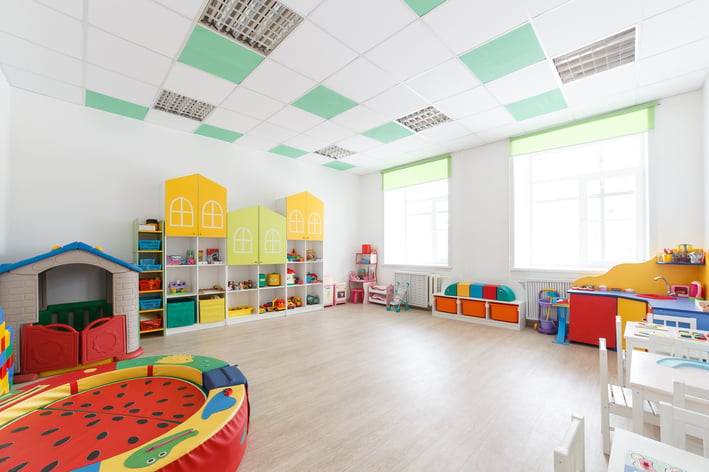
Having a low shelf, with the available toys arranged in clear bins or on the shelf itself will make it easier for children to see what is available. This will also make it easier come clean-up time because everything has its own place. Things like toy chests and large bins are great, but toys often get all mixed up and jumbled in there and kids forget they even exist.
Promote independence by labeling
One of the goals of early childhood education is to help children gain the skills they need to function independently in their environment. In a childcare setting, this means having opportunities for them to clean up after themselves, put away their own belongings in their cubbies or on hooks and participate in diaper changing or toileting.
It helps if everything the children need throughout the day is accessible to them, so they can grab them without your help. Clear plastic bins are a daycare provider's best friend, and having multiple bins for each child to store extra clothes, nap items and diapers will allow you to keep everything organized.
When each child’s bins are labeled with their name, it helps them start to recognize their name and the names of their friends, too. You can have a low cubby shelf in or near the bathroom with toileting items, one in the nap room where you store your nap items, etc.
You can also choose a symbol or animal for each child, that you put alongside their name on all of their things (either a sticker or a print-out). This can help even the smallest children learn to identify which items belong to them.
Make the most of the walls
One of the easiest and cheapest ways to change up the mood of a whole room is by applying a fresh coat of paint! Studies show that there are certain colors that promote peace and calm, and other colors can be overstimulating. If you notice your children are having a hard time napping in the nap room or get too silly during circle time, try giving your walls a makeover! Very pale blues, greys, and lavenders can be especially calming. The paler the shade the better when it comes to keeping the vibes in a room tranquil.
Color ideas (and their hex codes):
Ivory: #EDE9E3
Nude: #E7D7C9
Lavender: #F3F0FF
Stone: #D9D9D9
Sea: #D2EBE2
Shop second-hand
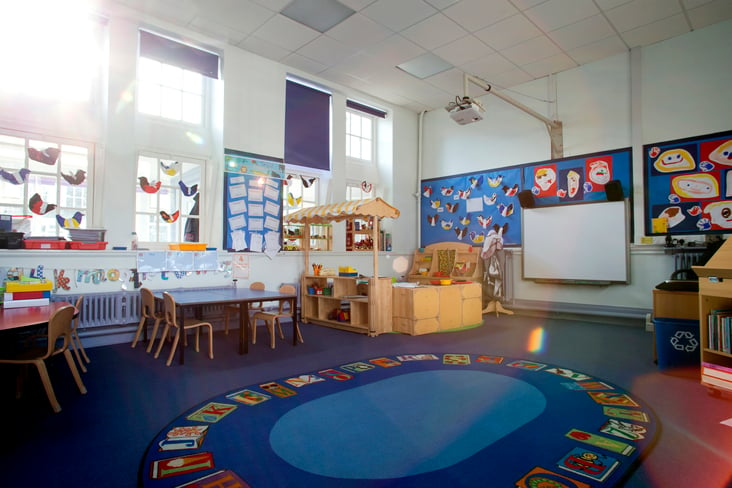
You can find lots of really great furniture or storage items at your local thrift store. Whether you are looking for some fun baskets to store toys or supplies or in need of a new shelf, check out what you can find used before buying new. Thrift stores also often have fun antiques or interesting materials that you can use in your daycare classroom.
For example, wooden bowls for snack time or for a sensory bin can be expensive if you buy them new but are always cheaper if you buy them second-hand. You can also find lots of children’s books, clothes for your dress-up area, and sometimes toys or games that are still in great shape!
Support all children
Every child is different, but there are many things you can do to make your space as inclusive and accessible as possible.
- Sensory supports: Some children need quiet spaces away from the group to recharge and relax. A small reading nook or play tent is a great way to support that need.
- Adaptive seating: Sometimes, children have trouble sitting on the rug, either because they are too wiggly or because their bodies aren't comfortable sitting cross-legged. Allowing children to sit the way is most comfortable and providing them with bumpy seats or other seating options helps them be successful while remaining a part of the group.
- Visuals: For children with auditory processing issues, kids who are hard of hearing, or who speak a language other than the dominant language of the classroom, having visual schedules and lots of visual prompts can be very helpful.
- Safety: Make sure the environment is safe for children and free of hazards
- Communicate with parents: The best way to support a child is to partner with their parents. They may have some tips or strategies for things that work at home that you can use in your program.


