

Christine Hernandez
Early childhood educator, writer, and mother. Your friendly neighborhood guide to all things parenting.
When searching for childcare or preschool for your child, you may come across the term "kindergarten readiness" and wonder what exactly it means. Is there a list of things a child should know or a checklist of expected behaviors? Like most parenting-related things, kindergarten readiness isn't a one-size-fits-all concept, and expectations may vary from school to school. We're here to help by breaking down the basics of kindergarten readiness, including how to determine if your child is ready and what to do if you're not sure!
How does attending daycare or preschool prepare a child for kindergarten?
Preparing a child for kindergarten starts from the moment they set foot into a group environment, whether it's daycare or a preschool program. Sharing, taking turns, learning to consider someone else's feelings, sitting down to listen to a story, or participate in circle time- these are all skills necessary for future academic success. Children learn best by exploring their environment, and so much learning happens naturally through play and interacting with their peers.
Aside from the social-emotional aspects of preparing a child for school, daycare and preschool programs often work on pre-academic skills- basic math concepts, letter-sound recognition, recognizing common words in print (like their name), and pre-writing skills.
How do you define readiness for kindergarten?
In most states, a child is eligible to enter kindergarten when they turn five. However, the "cut-off date" that determines exactly when a child is eligible to enter school varies from district to district and state to state. As a result, there may be children who are nearly a full calendar year younger than their peers entering kindergarten at the same time as children who have been five for many months.
These age discrepancies make it difficult to create a standard set of skills or behaviors that all children are expected to have mastered before entering kindergarten. However, there are some basic concepts and behavioral milestones that most preschool and kindergarten teachers would agree upon as benchmarks for school readiness.
Kindergarten readiness checklist
Social-Emotional
- The ability to separate from their caregiver without (too much) distress
- Self-care skills such as the ability to ask to use the bathroom and use it independently, get their shoes on or off, get their jacket on or take it off, etc.
- Working toward self-regulation, being able to follow the directions of an adult other than their parents, and focus (for at least a few minutes) during a story-time or circle time
- The development of emerging social skills such as sharing, taking turns, asking and answering questions, and engaging in conversation.
- Can make their needs known
- Knows their first and last name as well as their age
Fine Motor Skills
- Able to use scissors to cut along a (somewhat) straight line, curvy line, and other pre-drawn shapes
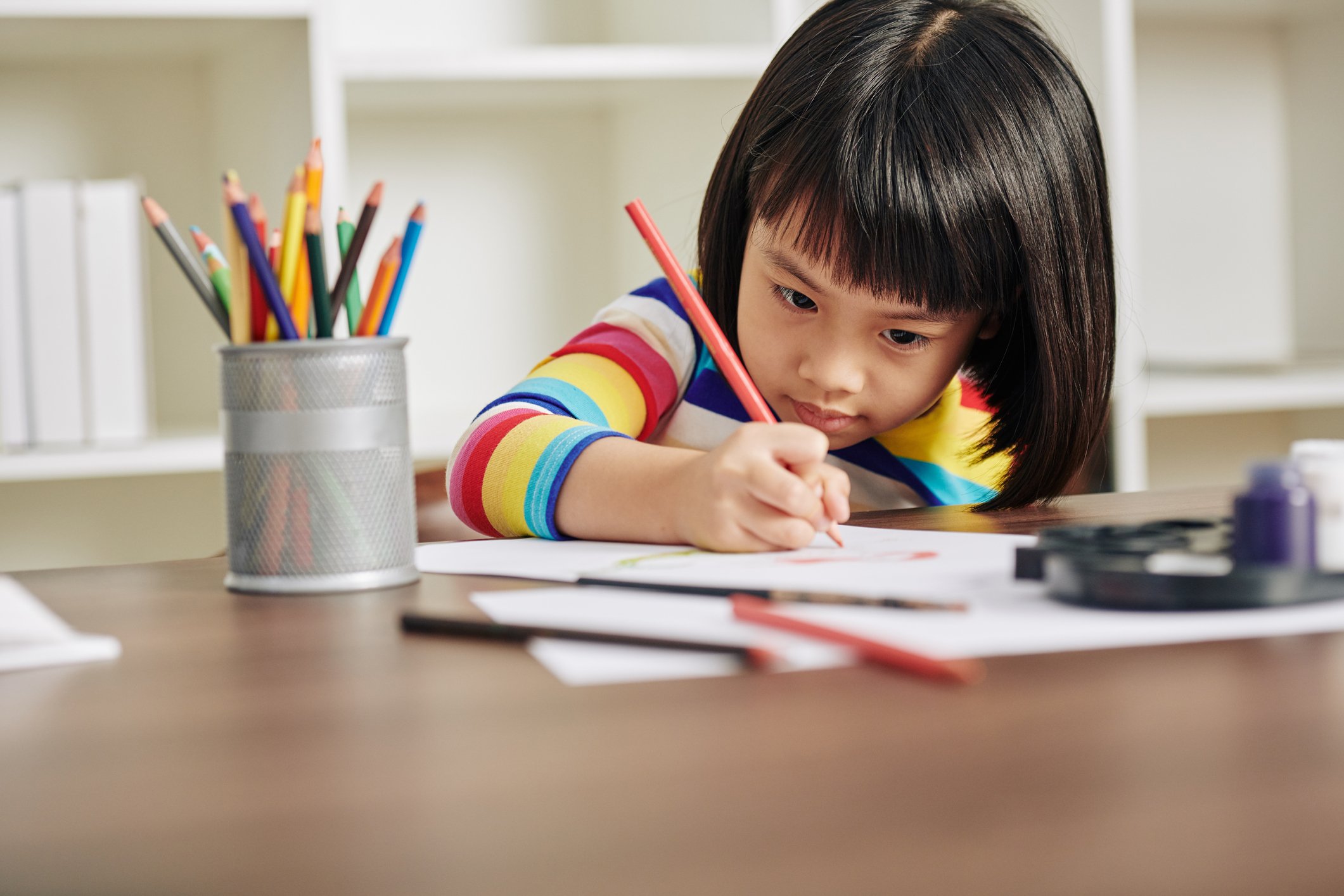
- Able to use a pencil, markers, and crayons with control
- The emergence of writing skills, copying or writing a few letters, especially the ones in their name
- Copies figures such as straight line, x, +, and O
Gross Motor Skills
- Is able to run
- Can jump and land on two feet
- Can hop on one foot
- Is able to climb stairs alternating feet
Math Skills
- Rote count 1-10 without skipping numbers
- Count 10 objects using 1:1 correspondence (pointing to each object as they count)
- Recognize basic shapes
- Understand bigger, smaller, more than less, less than
- Arrange three objects from smallest to largest
Language and Literacy
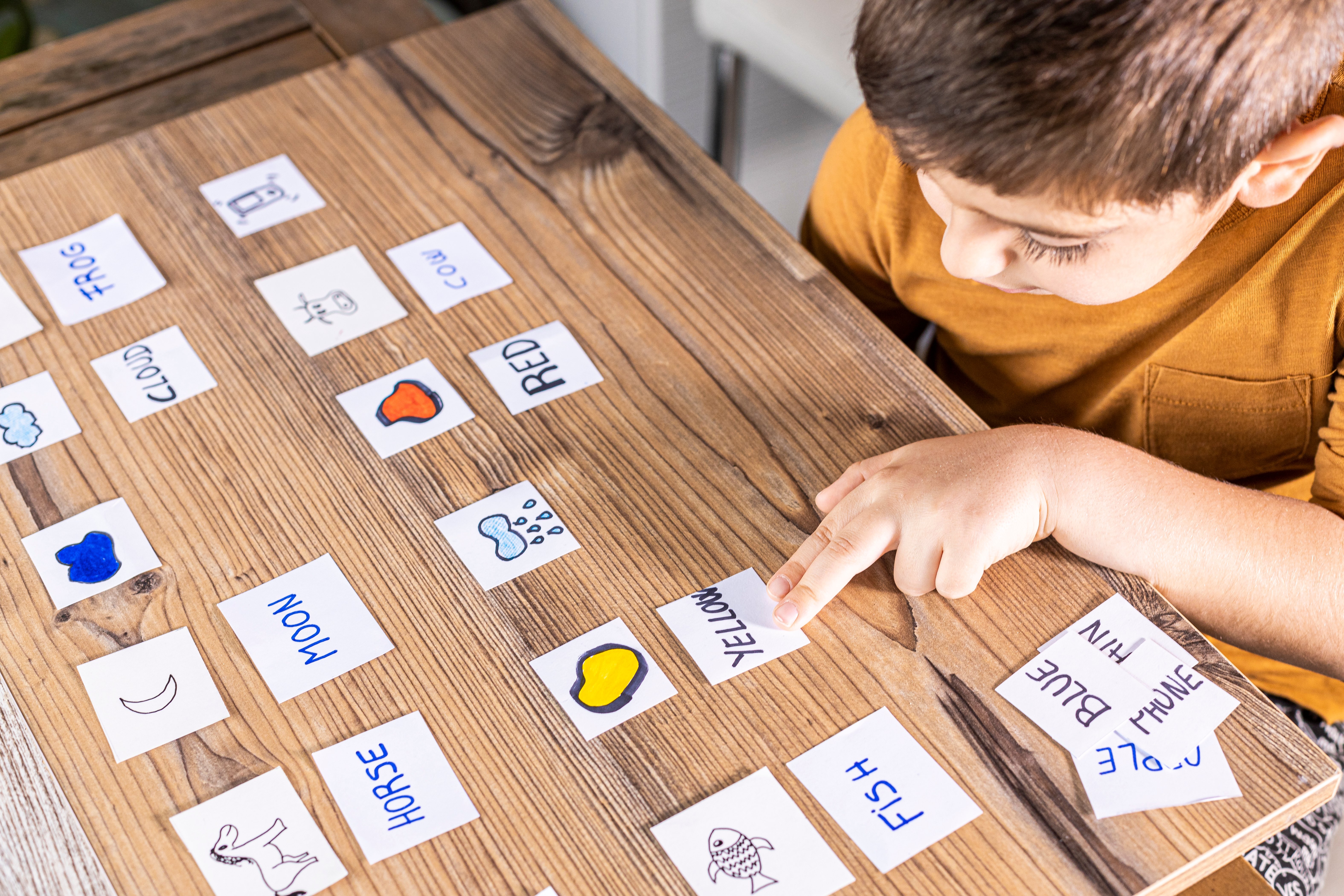
- Recognizes their name in print
- Recognizes familiar signs, logos, and other examples of "environmental print."
- Demonstrates book awareness, knows where the cover is, holds it right side up, turns pages, etc.
- Can identify two words that rhyme/sound the same
- Can recognize at least 10 alphabet letter names
- Can match a few letters with the sounds they make
- Will draw a picture to explain an idea or "writes" using pretend writing
- Shows an interest in books and reading
What if my child hasn't mastered everything on the checklist yet?
Every child develops at their own rate, and it's okay if your child hasn't mastered everything before they start kindergarten. Keep in mind that some children enter kindergarten without any previous daycare or preschool experience, and teachers are used to meeting every child wherever they are. If you have concerns about whether your child is ready for kindergarten, it doesn't hurt to speak to their preschool teacher or caregiver. You can also always reach out to your local elementary school and ask to talk to someone who works in kindergarten registration, and they may be able to help ease any worries you may have.
Linda Arias, a Kindergarten teacher in Corona, New York shared, "as long as they know the basics, the alphabet, can recognize most letters, hold a pencil, draw something, maybe even write their name, they are off to a great start."
If your child is on the younger side or you don't think they are ready for kindergarten, you can decide to hold them back a year. In that case, you may consider looking into whether your area has a Transitional Kindergarten or similar program for 5-year-olds who are ready to move on from preschool but aren't quite prepared for elementary school.
At the end of the day, you know your child best. If they seem ready for kindergarten, then they likely are, even if they don't check off every box by the first day of school.


