
-1.jpg?height=100&name=Image%20from%20iOS%20(2)-1.jpg)
Winnie
At Winnie, we believe all children deserve access to high-quality early education and childcare programs designed to meet their needs while encouraging and supporting their development. Every child is different and has unique strengths and challenges, and we recognize that no one term accurately describes every child's experience. In the context of this article, we will use identity-first and person-first language interchangeably as well as the term "special needs".
Finding the right childcare setting can feel overwhelming, especially if your child has high support needs. From securing the right services to finding the right caregiver, there are a lot of things to consider. We're here to break down everything parents need to know when looking for childcare for their special needs children.
- Can my special needs child go to daycare?
- How do I make sure my child has the support they need?
- What should you look for in a daycare when your child has special needs?
- What should I look for in a daycare if my child is deaf or hard of hearing?
- What other options are there?
- Questions to Ask a Special Needs Daycare Provider
- Inclusion vs. Special Education Settings: What’s the Difference?
- Common Myths About Kids with Disabilities in Daycare
- Additional Resources
Can my special needs child go to daycare?
Often parents wonder if their child's needs will be met at a particular childcare center or may even be concerned their child will not be accepted or may be kicked out due to their disability. It's important to remember that the ADA (Americans with Disabilities Act) prevents any daycare, preschool, or educational setting from discriminating against a child because of their disability.
Children with special needs can attend daycare or preschool right alongside their typically-developing peers. This is what educators refer to as the "least restrictive setting," you may hear that term being used during your child's IEP (Individualized Education Plan) or IFSP (Individualized Family Service Plan) meetings. You can also find childcare providers who have experience accomodating special needs on Winnie.
If your child has been evaluated and receives services, they may be able to receive those services while they're at daycare. They may even be eligible for some extra support, in the form of an extra teacher or para-professional in the classroom depending on the services they are eligible for. If you haven't yet had your child evaluated, your first step would be to talk to your pediatrician about your concerns in order to get a referral for an evaluation to get a better sense of what your child's needs are.
How do I make sure my child has the support they need?
If your child does not already have an IEP or IFSP in place, you are going to want to have them evaluated by your county or local school district.
If your child is under 3
Children under three years old fall under EI (Early Intervention) which is usually offered through your county Health Department. You do not need a referral from your pediatrician to request an evaluation through Early Intervention at no cost to you. All you need to do is locate the phone number for Early Intervention, call and tell them you'd like to have your child evaluated.
EI will schedule an evaluation and will look at all aspects of your child's development— speech, motor skills, and social skills. They will then determine if your child is eligible for services. Once your child is found eligible, a meeting will be held to discuss the plan for how to execute those services. Some EI providers come to your home, but they can also come to your child's daycare and work with your child there. After the meeting, your child will have an IFSP (Individual Family Services Plan) which will outline the services your child is entitled to and how frequently they are entitled to them.
Once your child is three years old, they will shift from Early Intervention to CPSE (The Committee for Preschool Special Education). This transition will happen without you needing to do much of anything, but you should just be aware that it will be happening so you can look out for any papers being mailed to your home, etc. Your child's current therapists will assess their progress and make recommendations about what services your child should have to be successful in preschool.
Once your child transfers to CPSE, another meeting will be held to formulate your child's IEP (Individualized Education Plan) which will outline their services and goals for their preschool years until they go to kindergarten. During this meeting, you can advocate for what you think your child needs and you are allowed to have an advocate with you if you feel that you need one.
If your child is over 3
If your child is over three and has never had an evaluation, you can request one through CPSE (Committee for Preschool Special Education) at no cost to your family. CPSE is offered through your local school district and you do not need a referral from your pediatrician to reach out to them.
Once you have contacted CPSE they will schedule an evaluation for your child and look at all areas of their development. From there, the therapists doing the evaluation will decide whether you child is eligible for services, or even a special education preschool setting. If your child is eligible for a special education placement, this will come at no cost to your family. If your child receives one or two services at their existing daycare or preschool program, this is also at no cost to you and will be done at your child's program or at a local therapy center.
What should you look for in a daycare when your child has special needs?
You know your child best, and you can focus on his/her strengths and abilities to find a program that meets their needs. Here are some key things to look out for when touring daycares to see if they are inclusive.
- Entrance/Accessibility - Be aware of the physical aspects of a daycare facility. Does it have a ramp or lift for wheelchair accessibility if your family needs one? Does it include automatic doors for easy access?
- Indoor facility - Check to ensure that the daycare has accessible equipment: tables, chairs, and restrooms. Search for an elevator to accommodate children with mobility devices.
- Educational environment - Ask about the background of the staff and any special training or education they have received. Ask about the curriculum they follow and how they plan for each child's individual education needs.
- Staff-child interactions -If you are able to spend some time in a classroom observing how the staff and children interact this is critical. Do the children seem happy and well cared for? Do the staff seem happy, like they genuinely enjoy what they're doing? If the children and staff seem happy and engaged, it is a good sign.
What should I look for in a daycare if my child is deaf or hard of hearing?
Every child is different, and every family has it's preferences for how they'd prefer their child to communicate. Some families want their children to learn and use ASL, while others want them to use spoken language. One of the first things you will want to consider is how the daycare will communicate with your child, and how they'll support your child in communicating with them.
Some families choose to send their children to daycare or preschool programs specifically for deaf children, while others prefer to educate their children alongside hearing peers. There are benefits to both options, it just depends on what you are most comfortable with.
You'll also want to ensure that the classroom your child is in is accessible to someone who is hard of hearing. Are there lots of visual cues? Can your child independently access the curriculum and materials, or do they need accommodations?
What other options are there?
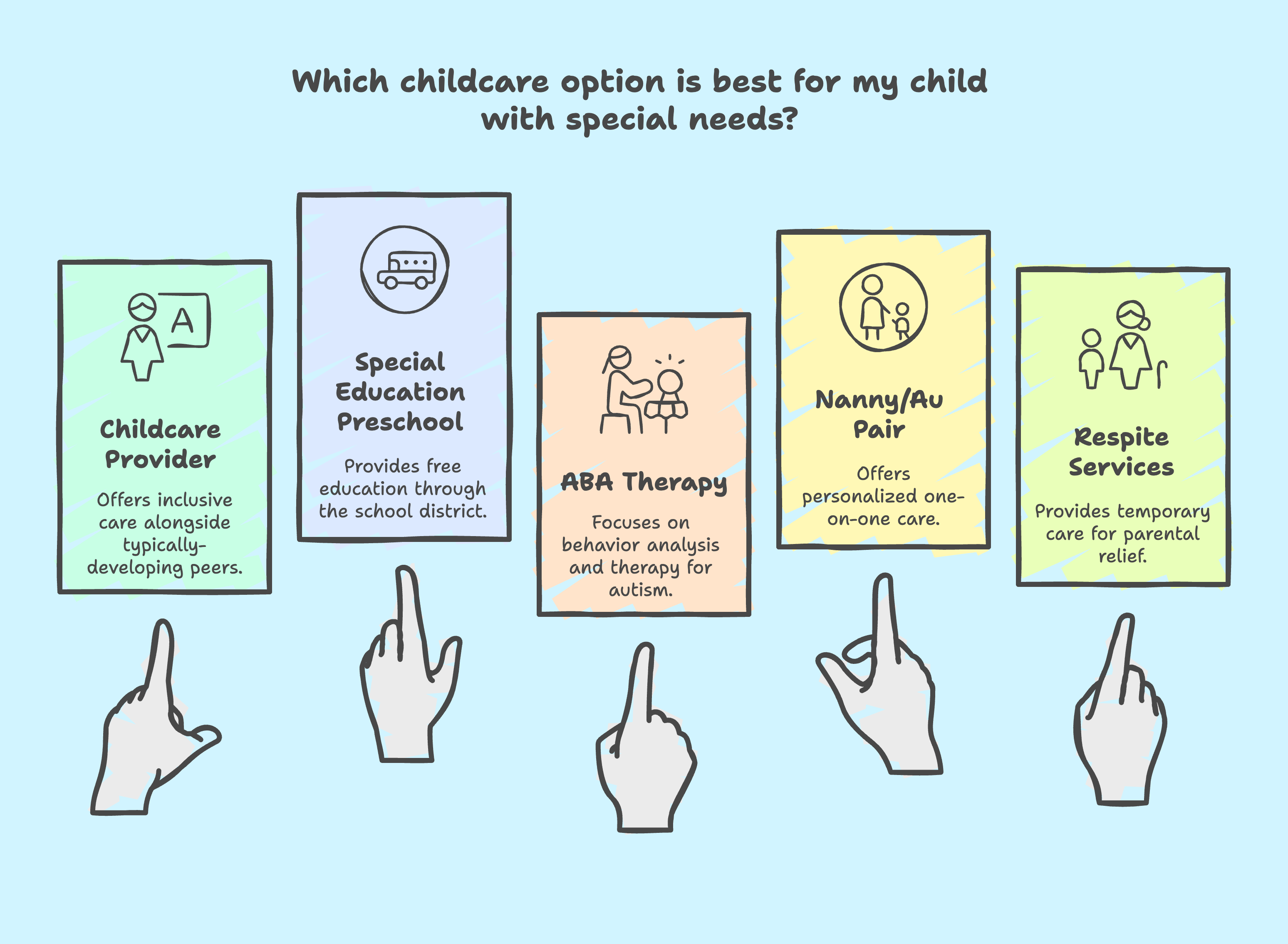
- Special education preschool programs: Depending on the age of your child and what their strengths and challenges are, they may be eligible for special education preschool services. This would allow your child to attend a preschool or early education program for free, through your local school district. You can reach out to your child's pediatrician or to your local school district to find out more about the local special education options available to your child.
- ABA: If your child has autism, they may be eligible to attend an ABA (Applied Behavior Analysis) center or clinic. ABA is a therapy some families choose for their autistic children, which can help with developing speech, help reduce challenging behaviors or work on other needed skills. Some children with autism attend an ABA center in place of daycare, as ABA therapy is typically time-intensive. Depending on the ABA center, children may also receive other needed therapies like speech, occupational therapy or physical therapy.
- Nanny or Au Pair: If you prefer your child to have one on one care, you may choose to find a nanny or Au-Pair qualified to work with your child.
- Respite: Depending on the age and needs of your child, your family may be eligible for respite services. This would allow for a trained caregiver to spend time with your child, in order to give you time to run errands or get work done. It isn't usually a full-time solution, but can still be useful for families.
No two children have the same needs, so it's important to trust your gut when it comes to finding the right daycare for your child. You can use Winnie to search for options near your home or along your commute, talk to the directors about your child's particular needs, and schedule tours of possible options.
Questions to Ask a Special Needs Daycare Provider
When exploring daycare options for your child with disabilities, it's important to have open conversations with providers to ensure their environment will be supportive and inclusive. Here are some helpful questions to ask:
-
Have you worked with children with disabilities before?
Experience matters, but so does a willingness to learn and adapt. -
Are you open to therapists visiting the center?
Some children benefit from in-center support from occupational, speech, or behavioral therapists. -
How do you communicate with families about a child’s progress?
Consistent, honest communication helps families stay involved and feel confident in their child’s care. -
Are staff trained in inclusive practices or adaptive communication?
This might include using visual supports, sign language, or behavior intervention strategies.
Inclusion vs. Special Education Settings: What’s the Difference?
Inclusion refers to children with and without disabilities learning and playing together in the same environment. Inclusive daycare programs provide support and adaptations so every child can participate fully.
In contrast, special education settings are designed specifically for children with disabilities and often offer more individualized services and specialized staff. These environments may be better suited for children who need intensive support throughout the day.
Choosing between the two depends on your child’s needs, your goals for their development, and the type of support offered by the daycare.
Common Myths About Kids with Disabilities in Daycare
There are several persistent myths about children with disabilities in group care settings. Here are a few to be aware of—and why they’re not true:
-
Myth: Kids with disabilities require one-on-one care and can't thrive in daycare.
Reality: With the right supports, many children with disabilities benefit from socializing and learning alongside their peers. -
Myth: Inclusive settings slow down the group or take attention away from other kids.
Reality: Inclusive environments foster empathy, cooperation, and understanding—skills that benefit all children. -
Myth: Providers need specialized degrees to care for children with disabilities.
Reality: While training helps, many high-quality providers can offer excellent care with the right mindset, collaboration, and ongoing professional development.
Additional Resources
If you are looking for more information about preschoolers and learning disabilities or ADHD, Winnie has a series of helpful resources for parents of young children.


