
-1.jpg?height=100&name=Image%20from%20iOS%20(2)-1.jpg)
Winnie
Providing high-quality childcare for children with autism requires strong collaboration between providers and parents. Every child with autism is unique, and their needs vary widely, so the key to success is open communication, flexibility, and a commitment to inclusion. By working closely with families, childcare providers can create a supportive and structured environment where all children can thrive.
Establishing Open and Ongoing Communication
Building a successful partnership with parents starts with listening. Parents of children with autism often have deep insight into their child’s strengths, challenges, and preferences. The first step is to have an open conversation with families about their child’s needs. Parents can share valuable information, such as their child’s sensory sensitivities, communication abilities, social preferences, triggers, and calming strategies. Understanding these details helps set expectations and allows providers to offer individualized support.
A strong communication system between childcare providers and families is essential. Many parents appreciate regular updates on how their child is doing throughout the day, especially regarding interactions with peers, meal times, and any challenges that arise. Using a communication notebook or a digital app can help document progress and provide a way for parents and providers to stay connected. These updates not only reassure parents but also help track behavioral patterns and progress over time.
Creating a Structured and Inclusive Environment
Children with autism often thrive in structured, predictable environments. Clear routines and visual schedules can provide a sense of stability, helping them understand transitions between activities. Using picture schedules, timers, or verbal cues can make daily routines easier to follow and reduce anxiety.
Sensory-friendly spaces are also important. Many children with autism have heightened sensory sensitivities, which can make certain environments overwhelming. Providers should consider creating quiet areas where children can go when they feel overstimulated. Offering sensory tools like noise-canceling headphones, weighted blankets, or fidget toys can also help children self-regulate.
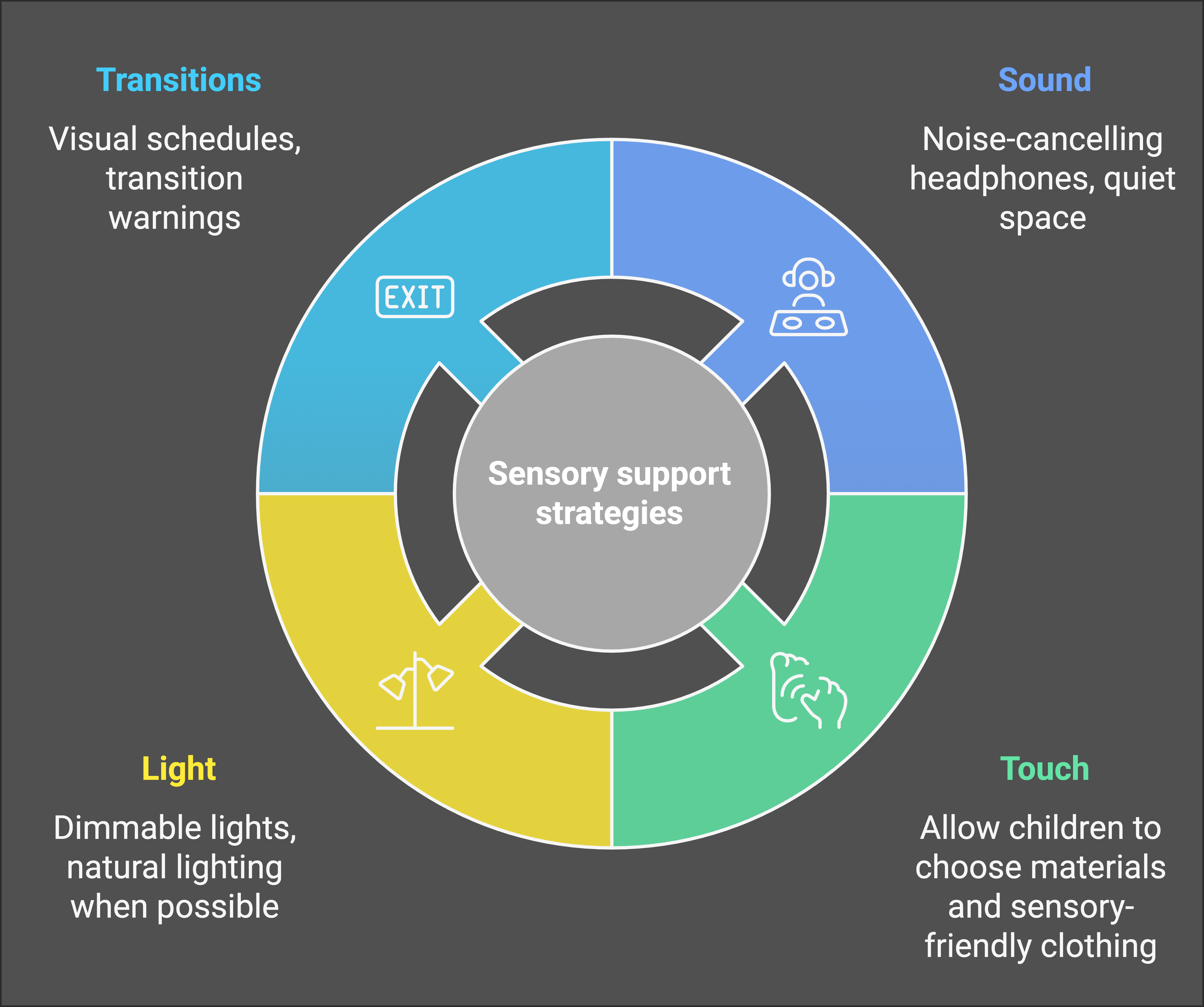
In addition to structuring the physical environment, childcare providers should promote inclusion by modeling positive interactions and encouraging peer engagement. Teaching children social scripts, turn-taking skills, and cooperative play strategies can help children with autism feel more comfortable and included in group activities.
Individualized Approaches to Learning and Play
Since children with autism have diverse learning styles and communication abilities, providers should tailor their teaching approaches to each child's needs. Some children may prefer hands-on activities, while others benefit from repetition and visual learning. Incorporating a mix of structured and free-choice activities can allow all children to participate in ways that feel comfortable for them.
Many children with autism communicate differently. Some use spoken language, while others rely on sign language, picture communication systems, or assistive technology. Childcare providers should work with families to understand the child’s communication style and provide appropriate support. Encouraging peers to use inclusive communication strategies—such as visual aids or simplified instructions—can foster better interactions among children.
Play is a key part of learning, and children with autism may engage in play differently than their peers. Providers should encourage a variety of play experiences, from sensory play and parallel play to interactive group activities. While some children may need support joining in with others, they should never be forced into social interactions. Instead, providers can gently facilitate engagement by introducing activities in a way that aligns with each child’s comfort level.
Managing Challenges and Supporting Behavioral Needs
Some children with autism may experience challenges with transitions, unexpected changes, or emotional regulation. To support them, providers should use proactive strategies such as giving advance warnings before transitions, offering choices when possible, and maintaining a calm and patient demeanor during moments of distress.
If a child becomes overwhelmed, it's important to have a plan in place. Rather than using punishment or exclusion, providers should focus on de-escalation techniques, such as guiding the child to a quiet area, using deep breathing exercises, or offering a preferred sensory tool. Partnering with parents to understand the best calming strategies for their child is key to maintaining a positive and supportive environment.
Building a Strong Partnership with Families
Partnering with parents of children with autism requires ongoing collaboration. Providers should be open to feedback, willing to adapt, and proactive in working with families to ensure the best outcomes for the child. Hosting regular check-ins—whether through informal conversations at pickup or scheduled meetings—can help build trust and alignment.
In some cases, families may be in the process of seeking a diagnosis for their child. Childcare providers can play a crucial role in supporting them by sharing observations and offering encouragement. However, it’s essential to approach these conversations with sensitivity, focusing on the child’s strengths and needs rather than labeling behaviors.
By fostering a culture of understanding, flexibility, and open communication, childcare providers can create a space where children with autism feel supported, and parents feel confident that their child is receiving the care they need.


