Christine Hernandez
Early childhood educator, writer, and mother. Your friendly neighborhood guide to all things parenting.
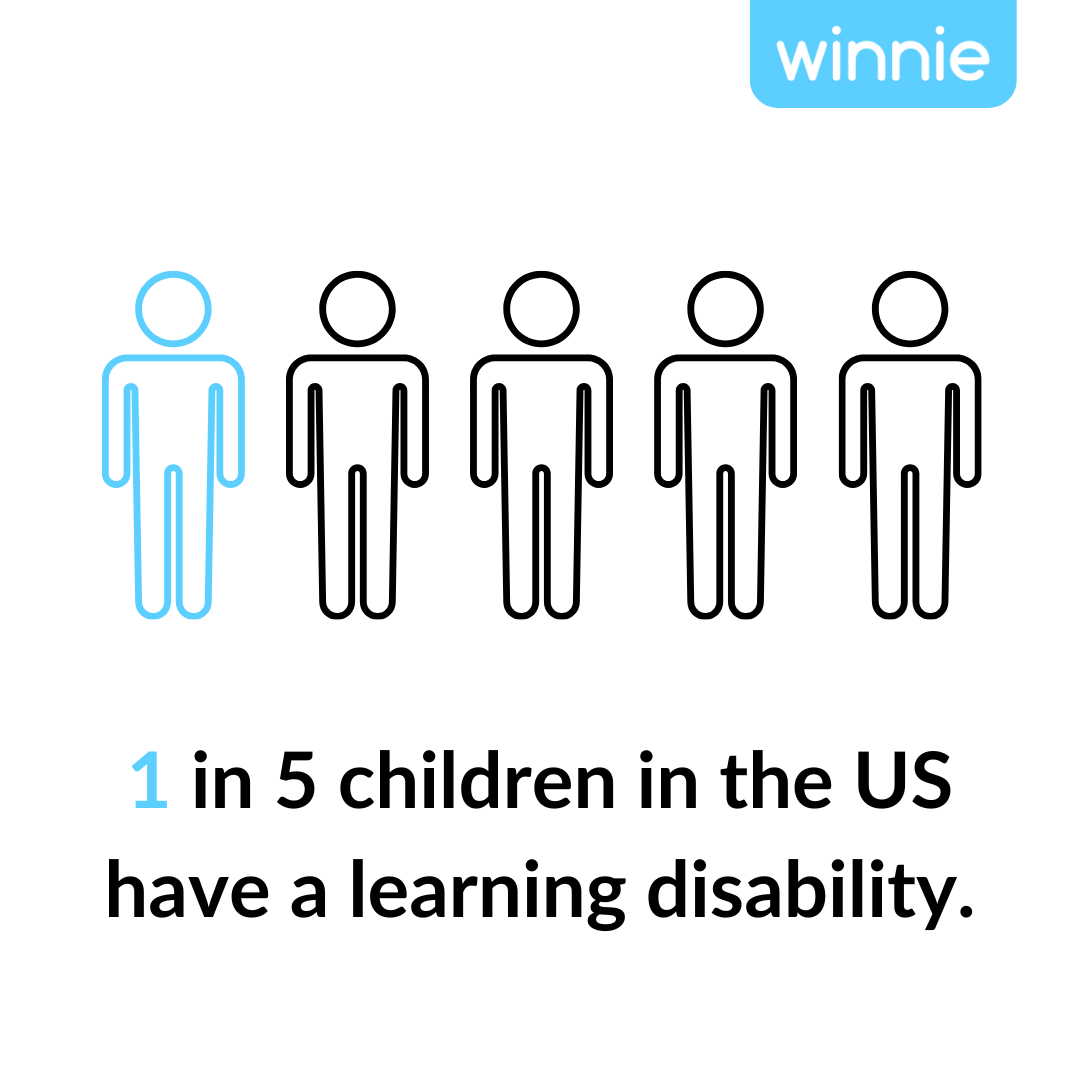
October is Learning Disabilities Awareness Month, a time dedicated to acknowledging and advocating for the one in five students who learn differently because they have dyslexia, ADHD, or other learning or attention challenges.
As a platform built by parents for parents, we know how challenging it can be to find high-quality, evidence-based parenting resources. Many of us at Winnie have been through the evaluation and educational testing process with our own children, and it can be tricky to navigate, especially during early childhood.
For the month of October, we are going to be breaking down what it looks like to parent a child with a learning disability. From early red flags to the evaluation process and various therapies you may encounter along the way.
For the context of this guide, we will be using the terms "learning disability" and "learning difference" interchangeably. We strive to use affirming language whenever possible.
You know your child best; if you have concerns or if this guide brings up additional questions for you — your pediatrician and your child’s teacher or childcare provider are great people to talk to.
What is a learning disability?
Learning disabilities are brain-based differences that affect the ability to understand or utilize spoken language, written language, coordinate movements, focus attention or internalize mathematical concepts.
Although young children can be diagnosed with a learning disability, they are mostly diagnosed or recognized when a child reaches school age. This doesn't mean that there aren't red-flags or things to look out for in early childhood, it just means that "typical" looks different during the preschool years than it does later in a child's academic career.