

Sara Mauskopf
Sara Mauskopf is the co-founder and CEO of Winnie. She’s also the mom of three young children and vocal advocate for high quality child care and early education for all.
At Winnie, we think a lot about revolutionizing the way working parents find childcare. As we work on our public mission to connect families with high quality child care, we simultaneously work on building an internal culture that deeply cares for our employees.
Research shows that millennials are more likely to value work-life balance than previous generations. In surveying our own employees, this sentiment rang true. We also know that42% of millennials are parents, and want the ability to be great parents and great employees simultaneously. Unfortunately, the pandemic made this impossible for many parents. A whopping 700,000 parents left the workforce in 2020, and two-thirds of those parents were mothers.
While the pandemic wreaked havoc on workplaces everywhere, some employers seized the opportunity to rethink work in a way that’s more appealing and optimal for the millennial generation of parents. These employers that adapted to the needs of millennial parents were able to retain their employees through even the most challenging times. In the aftermath of Covid, here are five ways that workplaces should be revolutionizing to better attract and retain millennials.
Tips to Change the Workplace for Millennials
1. Extreme flexibility
Millennials move more often than their predecessor generations making remote work a trend prior to the pandemic. Now that trend has been accelerated. Thanks to Covid, companies have had to adapt overnight to remote work and are in turn seeing the benefits of a more flexible work environment. In addition to winning over employees, studies show increased productivity from “work from anywhere” arrangements that never require employees to come into an office.
The more flexible the workplace, the more important it is for employers to shift from measuring productivity by the amount of hours worked to impact and results. This shift is ideal for working parents or others with caregiving responsibilities who have more limited hours. The future of work with millennials and their successors in Gen Z at the helm will be flexible and supportive, with an emphasis on employee satisfaction.
2. Childcare as a requirement, not a benefit
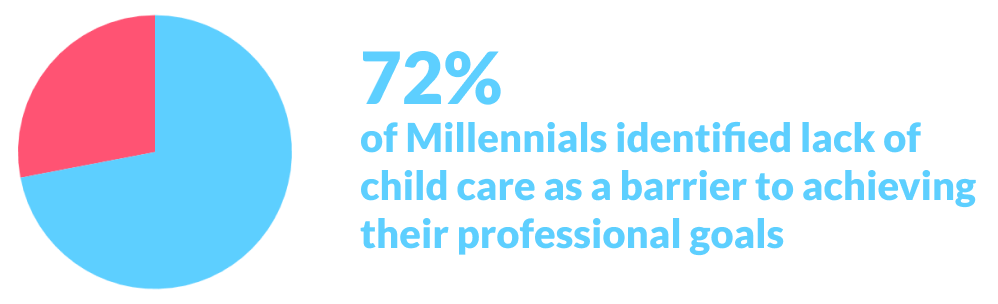
Despite having a reputation for being selfish, millennials have grown up to be selfless parents.Studies have shown more than 80% percent of millennials named access to child careas an important issue and 72% identified lack of childcare as a barrier in their professional lives. As we saw during Covid, lack of access to childcare pushed parents out of the workforce.
On-site childcare has often been floated as a solution to this problem, but it isn’t a quick fix. In fact, as more and more companies allow employees to work from home, childcare will need to be distributed to be closer to where people live. Additionally complicating things, different families have different child care needs. A parent of an infant will require a different arrangement from a parent of an 8 year old who needs after-school care.
Although a one-size-fits-all approach may not work, employers can still play a critical role in filling this essential need through things like childcare stipends, family-friendly policies, and simply just access to resources like Winnie and employee resource groups.
3. Talent that’s developed
The amount of high quality training and education that is available online is unprecedented. Companies can take advantage of this by offering a reimbursement for professional development and continuing education. This has two benefits. First and foremost, learning on the job brings great job satisfaction and pleasure to your employees. If you want happy employees, you will want to challenge and develop them.
The other big benefit is that you can hire people with high potential who may not have all the skills required for the position right away. In a competitive talent situation, the ability to hire for potential gives you a bigger talent pool and competitive advantage.
4. Real diversity and inclusion
It’s no longer enough to play lip service to diversity and inclusion. We now have so much data to show that diverse teams perform better, not to mention the amount of talent you are missing out on if you only hire and promote from a homogenous group of people. Your employees and potential employees will see right through empty promises of a more diverse and inclusive workforce.
So what is real diversity and inclusion? It means not just having employees of different ages, races, genders, and backgrounds on your team (though that’s a good start) but also on your cap table. It means hiring for culture add rather than culture fit. Most importantly, it means a deliberate commitment from the very top of your organization to build a culture that fosters diversity and inclusion.
5. Expanded parental leave
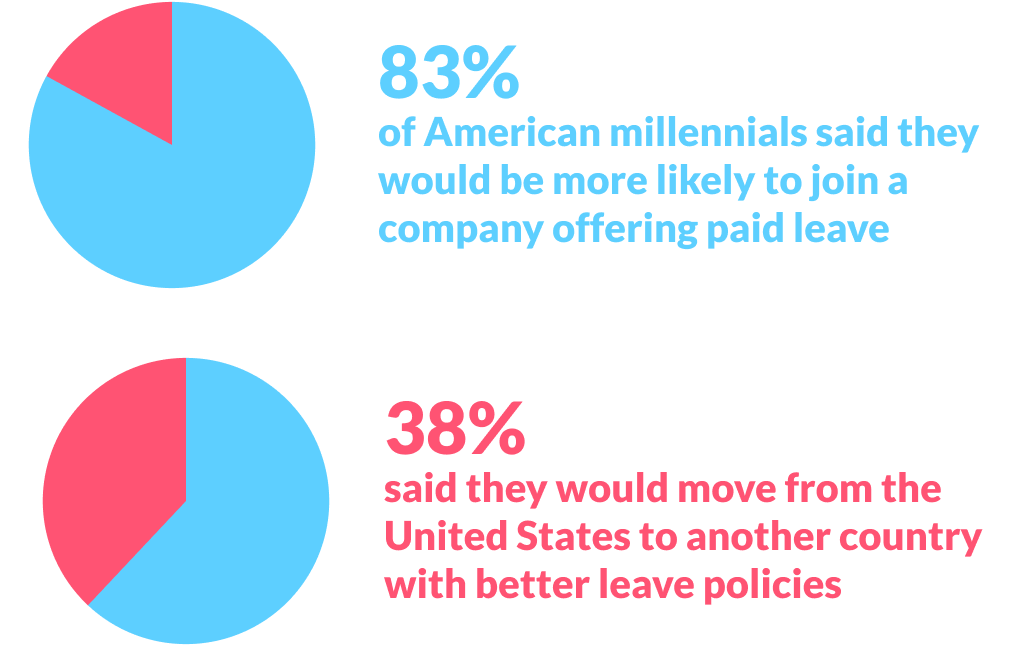
The United States states is lagging far behind the rest of the world when it comes to providing new parents paid time off from work to recover and bond with their new baby. That doesn’t mean that it’s not valued. In fact, millennials value parental leave so much that 83% of 9,700 people participating in Ernst & Young’s global generational survey said that they would be more likely to choose a job that offered paid parental leave over one that did not.
Beyond just providing paid parental leave, it’s important to encourage employees to take their leave, especially fathers.Paternity leave increases the likelihood that mothers return to work and it increases women's earnings. The length of parental leave and the extent to which it is offered equally to all parents are important factors to this generation of parent employees.
Generation Z and beyond
Gen Z, those born after 1996, have now made their way into the workforce.Their values are similar to those of millennials and all indications point to them wanting flexibility, childcare, professional development, diversity, and parental leave.
So what makes them different? Despite being digital natives, the Gen Z generation really values connection and in-person interactions in the workplace. Studies have shown that the majority of Gen Z employees prefer face to face communication at work over any other communication method. Employers who can figure out how to balance the desire for more flexibility with the desire to interact in person will win.


