
-1.jpg?height=100&name=Image%20from%20iOS%20(2)-1.jpg)
Winnie
It’s officially been over a year since the start of the pandemic, and the child care industry has been extremely hard hit. Daycare and preschool providers have acted as essential workers through this pandemic, with many barely making enough to get by, in an industry that’s 95% women. As we mark this unfortunate anniversary, we believe it’s important to reassess how early educators are handling the virus, and where they stand on important issues. We conducted a survey of over 1,000 providers to help get a better understanding of the industry’s situation.
Vaccines
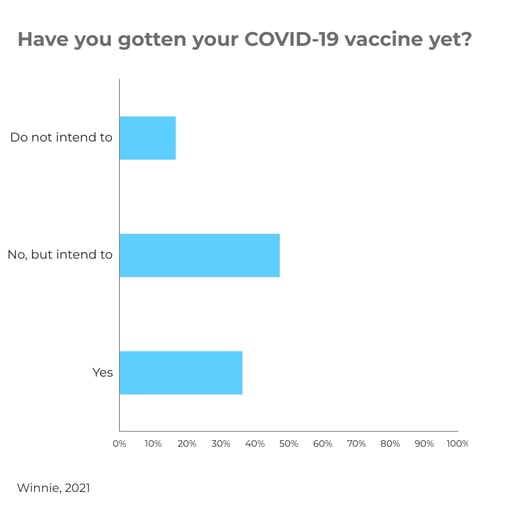
Our survey shows that over 83% of child care providers and early educators have been or are intending to get vaccinated when the vaccine becomes available to them. This is a substantial finding, and indicates just how hard Covid has impacted the industry. For many, catching the virus means losing important working hours or even clients that the business can’t afford to lose. The vaccine helps mitigate that risk.
Covid Safety
Most early educators are essential workers, and therefore have a higher chance of Covid exposure than other industries. We found that three-quarters of providers are worried about contracting the virus to some extent, with 23.5% saying they are “very worried” and 51.5% saying they’re “somewhat worried.” Providers are enforcing different rules to help mitigate the risk of exposure, with 95.9% requiring higher levels of classroom cleanliness, and 93.2% carrying out temperature checks. Other commonly used safety rules include:
- Masks for adults (91.7%)
- Health screenings (72.1%)
- Social distancing measures (70.2%)
Only 57.7% of providers reported enforcing masks for children.
.jpg?width=524&name=Slide-1-copy-2%20(2).jpg)
Staffing
We also asked providers what challenges their businesses are experiencing with staffing. Of the 95% who responded and said they were experiencing challenges:
- 43% said they were well staffed, but demand was low
- 23% said they don't have enough staff to meet demand
- The remaining 34% said they were struggling with both staffing and demand
Financial Situation
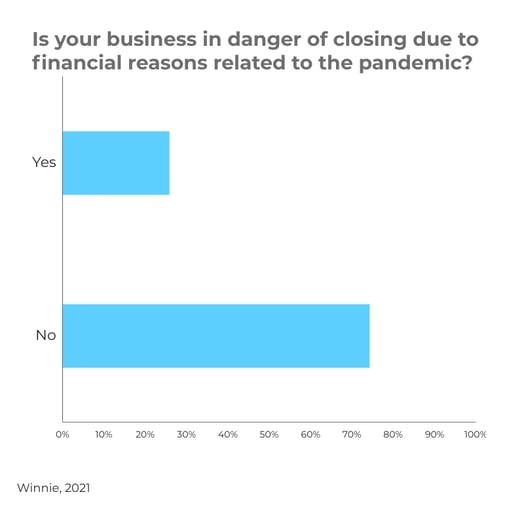
Over a quarter of our respondents say they’re in danger of closing permanently due to financial difficulties. Financial hardship during the pandemic is often attributed to decreased enrollment and increased operating costs as a result of the pandemic, and this trend is supported by our survey. Almost 80% of respondents are operating below 75% capacity. Additionally, a quarter report dedicating between 26 and 50% of their budget to COVID-19 related protective equipment, and the majority (over 65%) citing no change to their tuition cost, likely exacerbating the financial strain on the providers.
The vaccine rollout continues, and this progress comes at a pivotal time, as calls for the return of children to in-person schooling and child care are steadily increasing. This survey shines a light on the child care situation in American, and showcases the needs of the industry clearly.
“Early childhood educators and childcare providers are the unsung heroes of the pandemic, and their well-being is the key to our economic recovery,” said Sara Mauskopf, co-founder and CEO of Winnie. “The results of this survey tell part of the story and the difficulties they continue to face as a result of COVID-19, and I hope that the voices of these dedicated professionals will inform our leaders when making policy that affects the industry.”
Methodology: Based on a survey from February 22nd, 2021 to March 13th, 2021 of 1003 child care providers and early educators in the United States.


