

Christine Hernandez
Early childhood educator, writer, and mother. Your friendly neighborhood guide to all things parenting.
When parents are on the hunt for the perfect preschool for their child, it's easy to get overwhelmed with all the different philosophies and programs to choose from. From Montessori to High Scope, how is a parent supposed to know the differences between all the available options? At Winnie, we're all about helping parents make informed decisions about their child's early education, so we're breaking down some of the most popular types of preschool programs into exactly what you need to know.
A word about philosophies
A school's dedication to a particular philosophy usually falls somewhere on a spectrum from strict devotee to loosely inspired. Some types of preschools may be accredited by an organization within their philosophy, while others may combine a few different philosophies. It's important to ask clarifying questions about philosophy and curriculum when weighing your options.
Montessori
Montessori is an educational philosophy that came from Italy and was gained popularity in the United States in the 1960s. Since then, Montessori has been a popular form of education in early childhood, elementary school, and sometimes into the upper grades. Classrooms are structured using a mixed-age approach. Generally, there will be children between the ages of 3 and 5 in the same classroom, learning from each other. Younger children have their older peers to learn from, and the older children benefit from guiding the little ones.
In Montessori programs, the teacher is seen as a guide. They are there to facilitate, arrange the environment, and work with children individually or in small groups but rarely instruct the whole class at once. Since children are in the same classroom from ages 3-5, the teacher remains with the same class for more than one year. Classrooms are set up to allow children to be independent and self-select their activities. Children navigate the classroom independently, making choices about where they work and who they work with.
Something to think about: There is very little regulation around who can use the term "Montessori." Some programs may be Montessori "inspired" but may not have accreditation from the American Montessori Society. This does not reflect on the program's quality but is something to consider when speaking with the Director or provider.
Reggio Emilia
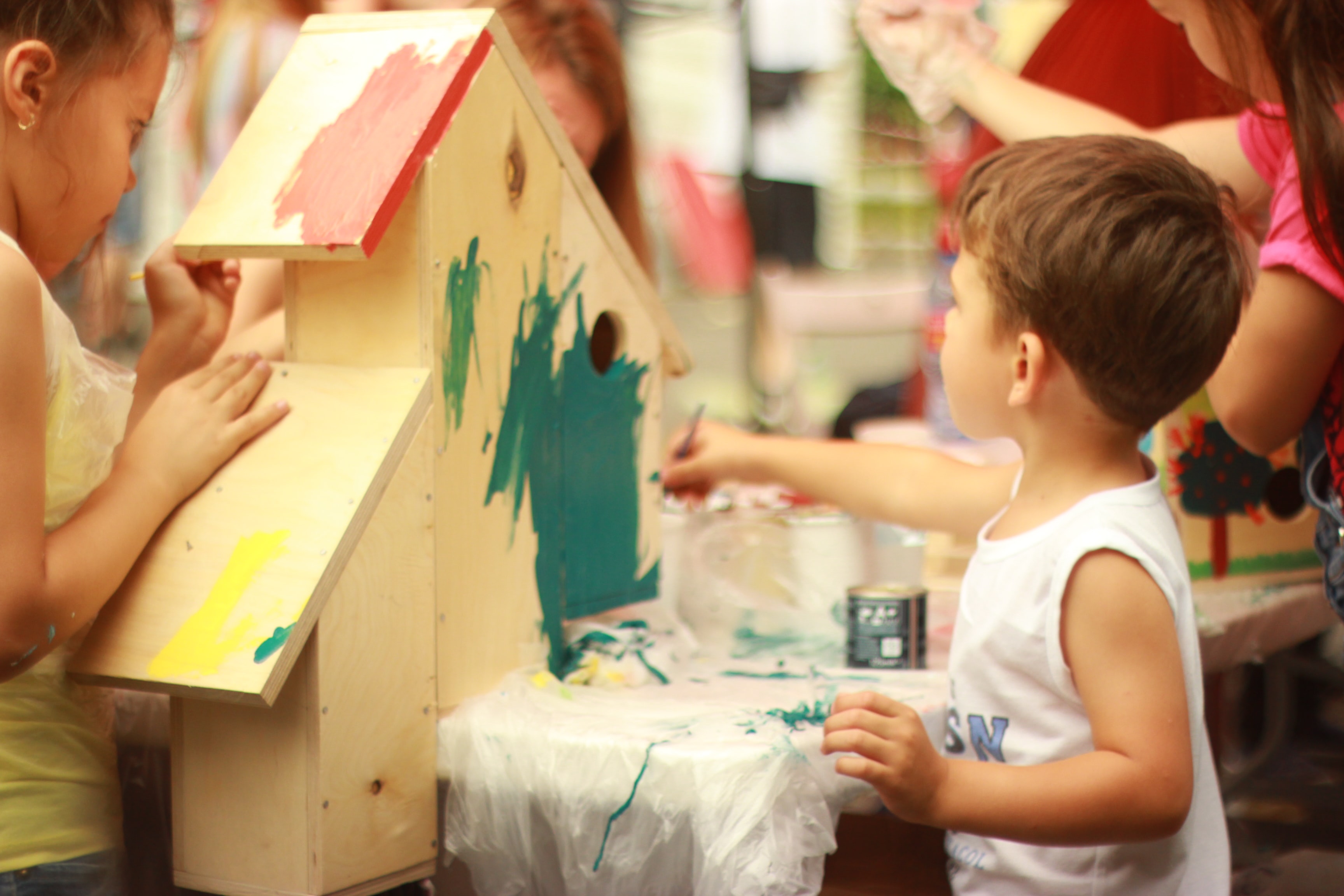
Another Italian import, Reggio Emilia, is a child-driven educational philosophy focusing on beauty and wonder. Reggio Emilia schools are typically filled with children's artwork, as they encourage children to document their learning through representation. In Reggio-Emilia programs, there is usually an atelier, or art studio, where children create using various materials such as paint, cray-pas or pastels, clay, paper mache, and loose parts found materials.
Teachers are there to observe children's interests and curiosities and design a curriculum that reflects the interests of the class as a whole. They guide the children, document their learning, and have a profound respect for the children's ideas and input. The classroom environment is considered the third teacher in Reggio Emilia, and careful attention is paid to the layout, design, and materials offered. Children are seen as curious, creative, and capable protagonists in their learning process. The children drive the curriculum, in partnership with the teachers and there is an emphasis on community and collaboration.
Waldorf
The Waldorf approach, also known as Steiner education, was developed by Austrian educator Rudolf Steiner in the 1900s. Waldorf classrooms are typically filled with wooden toys and creative, open-ended materials. The focus is on curiosity and creativity in early childhood, and formal academics are not introduced until elementary school.
Waldorf education often has a spiritual component and a reverence for nature. There are often harvest celebrations and routines and rituals inspired by season changes and the natural world.
High Scope
With a 50-year track record of working toward closing the achievement gap through equitable early childhood programs, High Scope is the curriculum found in many Head Start programs. Active learning is at the heart of the High Scope curriculum, and children are encouraged to explore their environment while learning through play. Teachers work as partners in a child's learning process, scaffolding their play and providing them with encouragement and opportunities for growth.
The classroom environment promotes independence and is divided into centers. Materials are diverse and open-ended, curated to reflect the class's home language and culture. The most well-known aspect of the High Scope curriculum is the "plan, do, review" sequence. Teachers ask children to plan what they will work on during choice time; the children execute their plan and then reflect on how it went with their teachers and peers. This promotes the higher-level thinking skills needed for later academic success.
Bank Street/Progressive
Developed at the turn of the 20th century in New York City by Lucy Sprague Mitchell, The Bank Street approach (sometimes referred to more generally as "progressive education" or the "developmental-interaction approach") is a philosophy that seeks to educate the whole child.
The core of the curriculum is social studies, which starts at the preschool level by studying families, neighborhoods, and the classroom's immediate environment. Children go on information-gathering field trips, conduct interviews, and engage in real-world, hands-on investigations of their surroundings.
Classrooms are a microcosm of the society they're in, with each child bringing to the table their own culture, interests, and values. There is an age-appropriate focus on social justice and equity, as well as the democratic process.
Religious
Religious or parochial schools vary widely and depend on the particular program's views and values. They may follow an established curriculum or educational philosophy. There may be lots of religious instruction or no mention of religion at all. Touring a religious preschool or discussing with the Director would be your best bet for determining whether a particular program would be the best for your child.
Parent Co-op
Co-op preschool programs are started by a like-minded group of parents who want a more active role in their child's education. They may follow an established philosophy like Montessori or Waldorf or create their own value system that guides the curriculum. Parents serve on committees and have input into everything from the hiring of staff to fundraising and more. Parents also volunteer their time in the classroom, serving as assistant teachers on a rotating basis. Parent co-ops vary widely from program to program, so it's important to ask questions.
What about Nursery School?
Nursery school is generally just another word for preschool. It tends to be used in some areas more than others, and it can be used to describe programs for two-year-olds and three-year-olds but not as frequently for four year olds. Nursery school programs aren't usually full-day or five days a week, they are more likely to be a few days a week for just a few hours a day.
As with all parenting decisions, you know your child best, so trust your gut when it comes to choosing a daycare or preschool program.


