

Christine Hernandez
Early childhood educator, writer, and mother. Your friendly neighborhood guide to all things parenting.
From birth, children begin exploring the world using their senses. From infants mouthing toys to toddlers splashing in the bathtub, sensory-rich experiences are crucial for brain development. By providing experiences that allow children to use their senses, we’re helping lay down the foundation for future learning.
- What is sensory play?
- Why is sensory play important?
- Sensory play through the ages
- The lesser-known senses
- Sensory activities for each sense
- How to introduce sensory play
- Sensory play and autism
What is sensory play?
Sensory play technically refers to any experience that stimulates a child’s senses, but most people associate it with messy play. Children are hands-on learners and benefit from getting their hands dirty (literally). When little brains are developing, they’re rapidly making connections, and stimulating multiple senses at once can help to strengthen those connections. Many preschool and childcare programs incorporate sensory play into the day and may have a dedicated sensory table with different materials for children to explore.
Why is sensory play important?
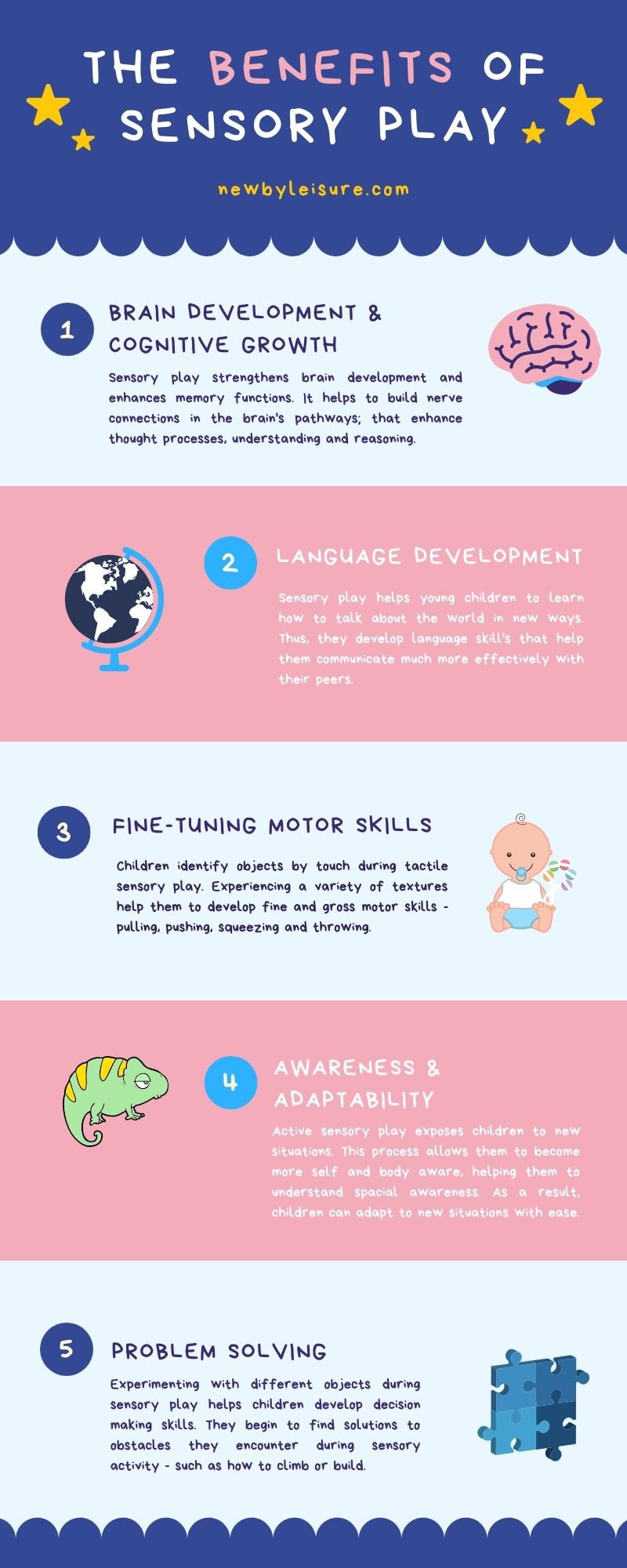
Engaging in sensory play can help children develop language skills, motor skills and help with self-regulation and taming tantrums. Specifically, sensory play can help with:
- Fine motor skills: using materials like playdoh, putty and other sensory materials can help children develop the hand strength needed for writing and cutting down the road. Actions like pulling, pinching, ripping and mixing are all great for working on fine motor skills.
- Vocabulary and language development: Sensory play is perfect for developing vocabulary and working on language development. Words related to the materials such as smooth, bumpy, wet, or rough can be introduced and children are more likely to absorb the new vocabulary since they are learning through hands-on play.
- Flexibility: Some children do not like getting messy or avoid certain textures. Regularly engaging in sensory play can help build their "sensory stamina" and teach them that it's okay to get messy!
- Picky eating: Some children are uncomfortable with certain textures and may refuse to eat things that are too mushy or a certain color. Sensory play can introduce children to new textures in a fun and low-pressure way that may help them be more willing to tolerate them on their plate.
- Self-regulation: If you've ever watched a preschooler play in a water table you know how calming water can be. Some children are comforted by certain textures, or by receiving deep pressure (like a nice tight hug). Once children learn what kinds of sensory experiences help them calm down or stay focused, they can begin to self regulate.
Sensory play through the ages
Sensory play isn't just for preschoolers, babies can join in the fun too!
0-6 months: There are lots of ways to help babies explore their senses. From toys that make crinkly noises when you touch them to warm bubble baths, everything in a babies environment is primed to stimulate their senses.
6 months- 1 year: Once babies are started on solid foods, there are even more textures and sensory experiences to explore. Letting your baby get messy during meal times with yogurt or oatmeal is a great sensory experience.
1-3 years: Once your child reaches toddlerhood, they are ready to explore their environment even more. Depending on whether they are still putting everything in their mouths, you can introduce playing outside in the mud and getting proprioceptive input at the playground!
3 years and beyond: Once children reach preschool they are ready to start exploring lots of different textures and experiences. They may be developing their body awareness and balance on the playground and may be more comfortable getting messy during art or sensory play.
The lesser-known senses
Most people are familiar with the senses of sight, taste, smell, hearing, and touch, but there are a few more that are equally as important for brain development.
The proprioceptive system helps us know where our bodies are in space. It takes in information from the skin and larger muscles and helps with everything from self-regulation to determining how hard to press with a pencil while writing.
The vestibular system helps our body sense which way is up and which direction we’re moving in. It lays the foundation for walking, running, jumping, and climbing by allowing the body to sense its relationship to gravity.
The interoceptive system allows us to sense what is going on inside our bodies. From hunger and fullness cues to feeling the urge to use the bathroom, this system plays a huge role in our lives.
Sensory activities for each sense
Hearing: Play games where your child has to name the source of a sound. For example, “which animal makes this sound” or “can you name this person’s voice.” Another way to develop your child’s hearing is by playing Marco Polo. Have your child close their eyes and follow the sound of your voice to find you.
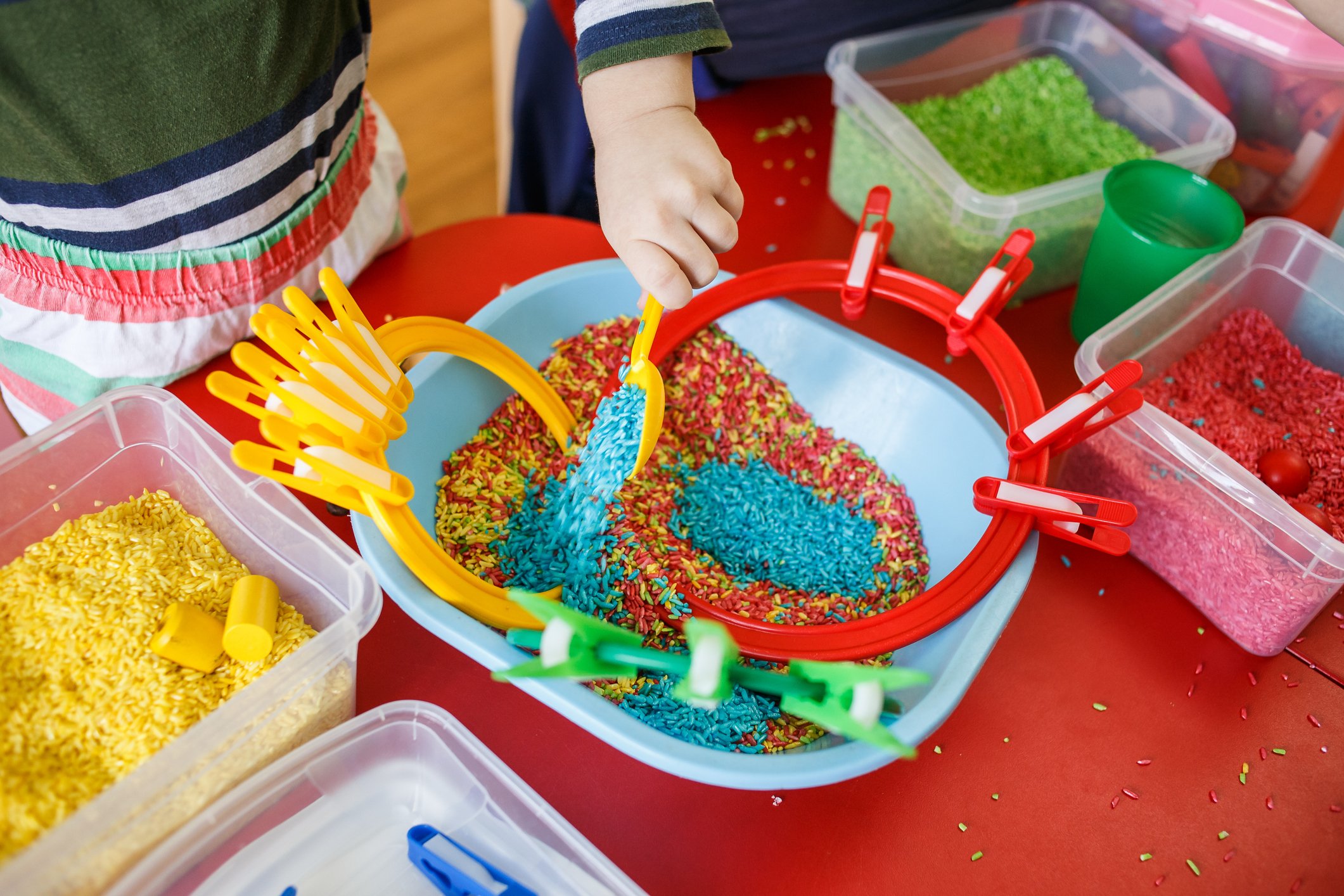
Touch: From sensory bins to fingerprinting and even meal times, there are so many ways to develop the ability to sense different textures through messy hands-on play. Materials like playdoh and therapy putty can also be a great way to work on hand strengthening in preparation for writing.
Smell: Play “what’s that smell” and have children smell different spices, herbs, or plants and guess what each smell is.
Taste: Provide lots of opportunities for children to explore sour, sweet and savory foods and help them learn to discriminate between the different flavors. Also, some children benefit from oral input like electric toothbrushes, chewing crunchy foods or chewy necklaces.
Sight: Providing your child with hidden picture puzzles and other opportunities to find an image hidden in a busy background can help develop their sense of sight.
Proprioception: Obstacles courses that involve jumping and crashing onto pillows or couch cushions are a great way to help your child develop body awareness.
Vestibular: Hide an object in the bottom of a sleeping bag and have your child crawl in to retrieve it. They will have to use their vestibular system to navigate their way back out and figure out which way is up without relying on their sense of sight.
Interoception: Help your child learn to trust their body’s signals by respecting their hunger and fullness cues and allowing them to choose how much to eat at each meal.
How to introduce sensory play
If you're new to sensory play, here's how to introduce it in a fun, safe, and lower mess way.
-
Start Small: Begin with familiar, low-mess activities like playing with dry rice, pasta, or water. Gradually introduce messier or more complex materials as your child becomes comfortable.
-
Offer Choices: Provide a variety of sensory materials and let your child decide what they’d like to explore. This empowers them and helps you gauge their preferences.
-
Create a Safe Environment: Ensure materials are non-toxic, age-appropriate, and safe for mouthing if your child is in the oral exploration stage. Always supervise sensory play to prevent choking or other hazards.
-
Make it Routine: Incorporate sensory play into daily activities, such as meal times, bath time, or outdoor play. For example, let your child splash in the sink while washing hands or play in the mud while gardening.
-
Join the Fun: Engage alongside your child. Modeling curiosity and excitement encourages them to explore new textures and sensations.
-
Observe and Adjust: Watch how your child reacts. If they seem hesitant, allow them to engage at their own pace. If they love a specific texture or activity, build on it to extend their learning.
Sensory play and autism
Children with autism or other special needs often benefit greatly from sensory play, especially when tailored to their unique sensory profiles. Observe their preferences and sensitivities—some may seek out certain textures or avoid others. Use calming, predictable routines and introduce activities gradually in a low-stimulation environment.
Great activities include sensory bins with dry rice or beans, water play for calming effects, deep pressure activities like jumping onto pillows, or tactile materials like kinetic sand. These activities help with self-regulation, focus, and social skills, providing a supportive space for exploration and growth.


