
-1.jpg?height=100&name=Image%20from%20iOS%20(2)-1.jpg)
Winnie
Catholic schools have been a part of the American education system for over a century, offering families a blend of faith-based instruction and academic rigor. While historically rooted in religious tradition, today's Catholic schools welcome a diverse range of students and families, some of whom are not Catholic.
Whether you're drawn to the moral foundation, strong academics, or sense of community, here’s what you should know as you explore Catholic education for your child.
What Are Catholic Schools?
Catholic schools are private institutions affiliated with the Catholic Church. They provide a dual focus on academic excellence and religious education. While rooted in Catholic teaching, they often emphasize values like compassion, service, and respect for others that resonate with families of all backgrounds.
Common Questions
Will my child be required to be Catholic?
No. Many Catholic schools enroll students from a variety of religious backgrounds. While religious instruction is a part of the daily curriculum, participation in sacraments or specific Catholic rites is not typically required for non-Catholic students.
How much religion is taught daily?
Religion classes are usually held daily and may focus on Catholic doctrine, Christian values, or general moral education. Prayer or reflection is often part of the school day, but schools aim to create an inclusive environment for all students.
Can I still be involved if I’m not Catholic?
Absolutely. Parent involvement is encouraged, regardless of religious affiliation. Whether you're volunteering in the classroom or attending school events, your presence and participation are valued.
Is it academically competitive?
Many Catholic schools are known for strong academics and college-preparatory programs. Class sizes tend to be smaller, and there’s often an emphasis on discipline, study skills, and a well-rounded education.
Who Attends Catholic Schools?
You do not need to be Catholic or even religious to enroll your child in a Catholic school. In fact, many families choose Catholic schools for reasons unrelated to religion, such as:
- Strong academic reputation
- Emphasis on character development
- Safe and nurturing environment
- Structured setting with clear expectations
Tuition and Financial Considerations
Catholic school tuition is typically lower than other private, secular schools, making it a more affordable private school option for many families. Costs vary widely depending on location and grade level, but many schools offer:
-
Scholarships or grants
-
Parishioner discounts for families who belong to the affiliated church
-
Financial aid based on income
When evaluating cost, many parents see Catholic education as an investment in both academic and personal growth.
Curriculum Overview
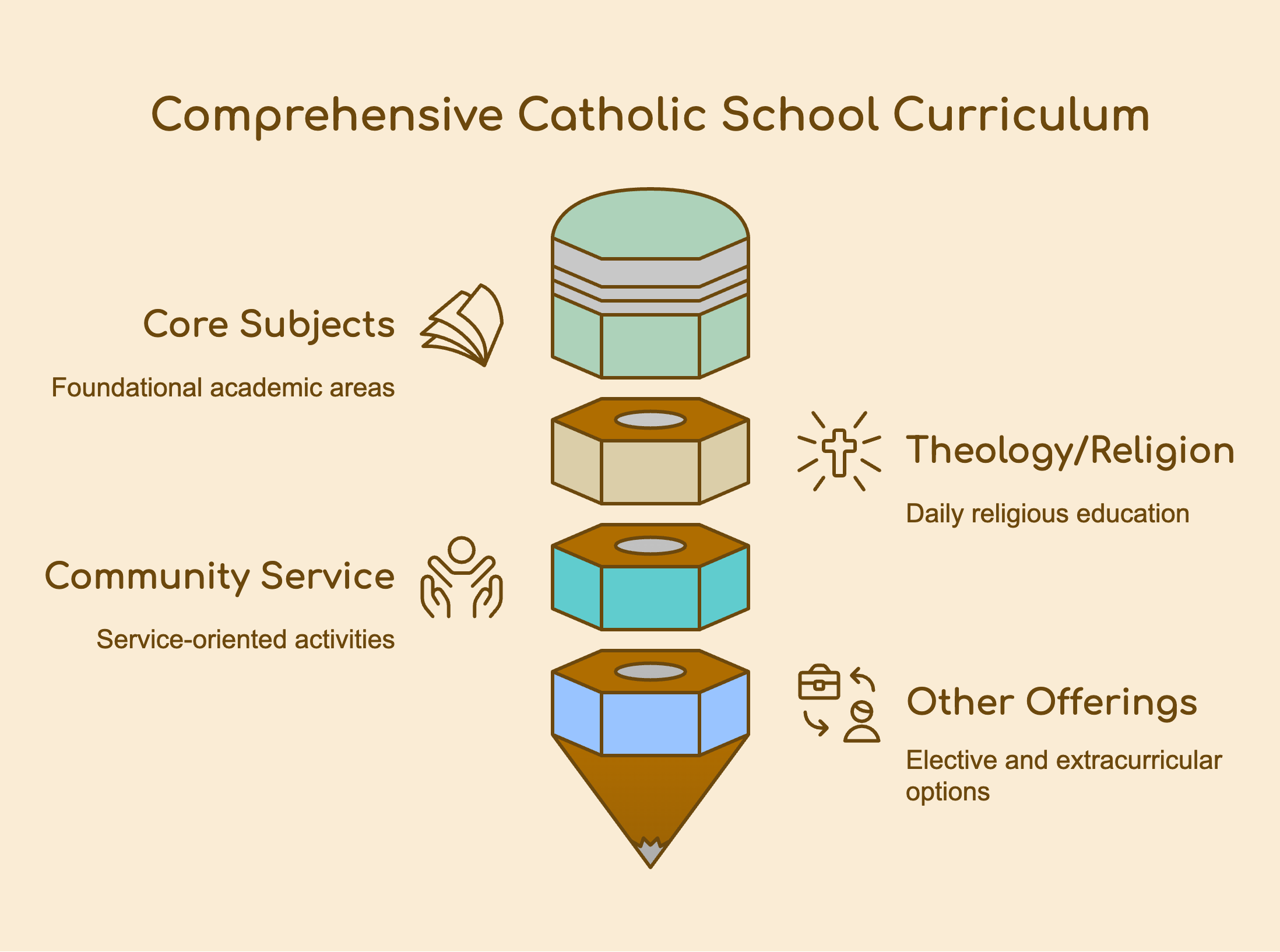
Catholic schools follow rigorous academic standards—usually aligned with state guidelines or set by the diocese. Here’s what you can generally expect:
-
Core subjects: Math, science, reading, writing, and social studies
-
Theology/religion: Required courses, typically once per day
-
Community service: Often a graduation requirement or part of student life
-
Other offerings: Foreign languages, speech and debate, arts, and technology
Compared to public schools, elective options may be more limited, but the overall focus tends to be on a well-rounded, values-based education.
Governance and Structure
Catholic schools can be:
-
Parish-run: Operated by a specific Catholic church
-
Diocesan: Managed by a larger regional body, like the local diocese
-
Independent or religious order-run: Affiliated with groups like the Jesuits or Sisters of Mercy
Each school has its own policies on admissions, uniforms, curriculum emphasis, and community expectations. It’s a good idea to tour the school and ask specific questions during your search.
What Makes a Catholic School a Good Fit?
A Catholic school may be a great fit if you're looking for:
-
A values-based education that emphasizes character, discipline, and service
-
An academic environment with high expectations and individualized attention
-
A strong sense of community where teachers, families, and students collaborate
-
Faith-based instruction, whether or not your family is practicing Catholic
Don’t Forget Preschool Options
Many Catholic schools offer preschool programs that serve as a gentle, values-centered introduction to school life. These programs often focus on social-emotional development, early literacy, and play-based learning within a faith-informed setting. Even if you’re not ready to commit through high school, starting with preschool is a great way to explore whether Catholic education aligns with your family’s needs.
Catholic schools combine academic rigor with a strong moral framework, making them an appealing option for many families. If you're exploring educational choices, visiting a Catholic school in your area can provide clarity on whether it’s the right fit for your child.


