
-1.jpg?height=100&name=Image%20from%20iOS%20(2)-1.jpg)
Winnie
It’s no secret that childcare is essential. It enables parents to work knowing their children are well cared for. However, childcare can be prohibitively expensive for many families, making it a significant financial burden. In 2023, the average annual cost of center-based infant care in the U.S. was over $14,000, with families spending as much as 32% of their income on childcare—far above the 7% affordability benchmark set by the U.S. Department of Health and Human Services. In 2024 and 2025, childcare costs have continued to rise.
In this blog post, we explore some of the reasons why daycare is so expensive and what can be done to alleviate the burden on families.
Ratios and regulations make childcare expensive
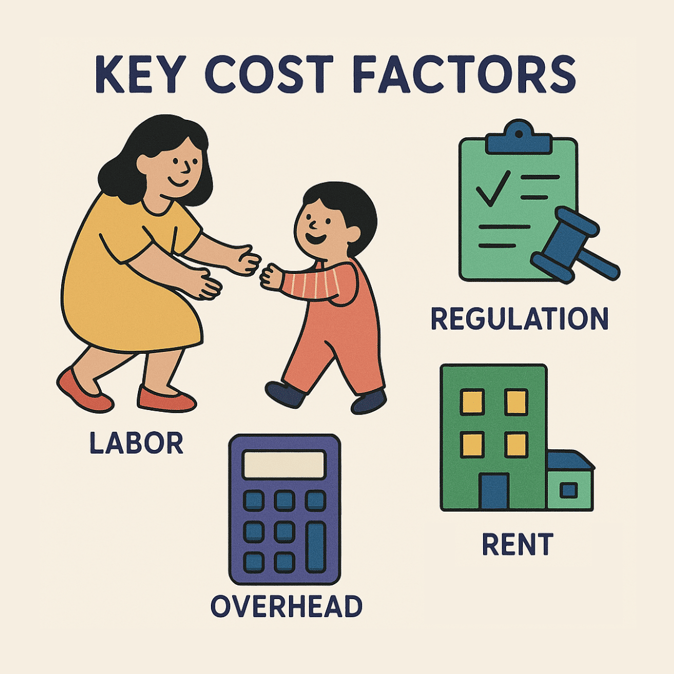
One of the main reasons why daycare is so expensive is due to the requirement to maintain low caregiver-to-child ratios. These regulations are in place to ensure that young children receive the attention, supervision, and care they need during such a critical stage of development. In some cases, this means having one caregiver for every three or four children.
For example, a daycare center with ten infants may need at least three caregivers to meet these standards. Employing enough qualified staff to maintain these ratios is essential for providing high-quality care—but it also means that labor costs make up a significant portion of a center’s expenses. This, in turn, affects the fees that centers must charge families.
In most states, infant care costs thousands more per year than preschool due to stricter caregiver ratios. As AI replaces more and more jobs, caregiving is one of those jobs that still requires human labor.
Rent can be expensive, especially in urban areas
Another factor that contributes to the high cost of childcare is the location of the daycare center. In urban areas, the cost of rent is often much higher than in rural areas, which means that daycare centers located in these areas must charge higher fees to cover their overhead costs.
Daycare centers located in urban areas may also face additional expenses such as higher utility bills and transportation costs. All these costs must be factored into providing childcare, making it more expensive for families living in these areas.
According to the U.S. Department of Labor’s database, rent and facility costs are a primary driver of high tuition in cities like San Francisco, Boston, and New York, where daycare can exceed $20,000 per year for infants.
Overhead expenses can be high
Despite high tuition, the average early childhood educator earns just $37k per year and many centers operate at or near break-even. Despite caregivers' essential role in society, their wages are often low, and they may not receive the same benefits as other workers. This underpayment of caregivers can result in high turnover rates and a shortage of qualified caregivers, which can increase childcare costs.
Beyond wages and rent, child care providers face a number of overhead expenses that add to the overall cost of running a center. These include:
-
Utilities – Heating, air conditioning, water, and electricity must be maintained for comfort and safety year-round.
-
Insurance – Liability, property, and workers’ compensation insurance are essential and often expensive in the childcare industry.
-
Food and snacks – Many centers provide daily meals and snacks that must meet health and nutrition standards, which adds up quickly—especially for full-day programs.
-
Cleaning and sanitation supplies – High standards for cleanliness (especially post-COVID) require daily sanitizing of toys, surfaces, and bathrooms.
-
Toys, books, and learning materials – Quality early education requires ongoing investment in age-appropriate and engaging materials.
-
Furniture and equipment – Cribs, high chairs, cubbies, mats, and other items must meet safety standards and be regularly maintained or replaced.
-
Technology and administrative systems – Centers increasingly rely on software for billing, enrollment, communications, and lesson planning, which adds to operating costs.
-
Professional development and training – To stay licensed, caregivers often need to complete continuing education or certifications, which centers may pay for or allocate time toward.
What can be done? Solutions for more affordable childcare.
Solving the daycare cost crisis requires multi-pronged solutions. Here are several actionable strategies experts suggest could reduce childcare costs while maintaining (or improving) quality. Many of these are being piloted in states across the U.S.
- Subsidies or tax credits to help offset the cost of childcare. States like Vermont, California, and New Mexico have begun providing free or heavily subsidized childcare for families below a certain income. Increasing federal and state support would reduce out-of-pocket costs and stabilize the provider ecosystem.
-
Raise wages and support the workforce. Childcare educators are underpaid and undervalued. States like Minnesota and California are piloting programs to increase compensation and benefits. A stronger, better-paid workforce increases supply and reduces turnover.
-
Support shared services and operational efficiency. By pooling resources across small providers—such as shared billing systems, substitute staffing, or purchasing cooperatives—centers can reduce administrative costs and avoid passing them onto families.
-
Promote employer-sponsored childcare. Only 12% of U.S. workers have access to employer-provided childcare. Tax credits and public-private partnerships can encourage employers to offer childcare benefits or on-site care.
-
Expand public preschool. Free or low-cost public preschool (e.g., universal pre-K) helps families avoid a year or two of daycare expenses and prepares children for school. Colorado, California, and New York are leading the way.
-
Innovate with funding models. States are experimenting with creative funding approaches like contracted slots, local tax measures, and blending public funding sources to help reduce parent tuition without compromising quality.
For more information on the cost of childcare, in your state check out Winnie's childcare cost calculator.


